How To Do Highlights at Home and Get Salon-Like Shine
Add dimension to your hair with the right home highlight kit



Highlights can add dimension, color, and shine to your mane. While you may consider highlights something best left in the hands of a professional, there’s no need to balk at the idea of learning how to do highlights at home. With the right home highlight kit, you can achieve salon-quality results from the comfort of your own bathroom.
Now, we’re not going to lie—nailing flawless, hair highlights at home requires a bit of patience and know-how. But it’s achievable, even for beginners—and we’re here to prove it. Ahead, we’ve put together some tips and tricks for you to easily transform your strands all on your own. Keep reading to learn how to do highlights at home, plus tips for taking care of your newly highlighted mane.


It’s time to put your hair coloring abilities and skills to the test with DIY highlights at home. Before breaking into the box dye and home highlight kit, let's do a brush-up on your at-home hair color basics. Here are some important steps to achieving your best at-home highlights.
Before you begin, gather everything you’ll need and set up in a well‑lit, ventilated space. Start with clean, product‑free hair, protect skin and clothing with gloves and a cape or old towel, and keep a timer, clips, and a handheld mirror ready. If you plan to go more than about two shades lighter than your current color—or your hair is very dark or previously colored—consult a professional colorist for the safest, most even lift.
No matter what route you take to your highlighted hair destination—solo or salon—the first step is settling on a style for your highlights at home. Depending on your preference, there’s a plethora of different types of highlights to consider. You need to decide between partial or full highlights, and whether you want them to be thicker or thinner.
To capture specific vibes, think chunky highlights for bold contrast, peekaboo highlights tucked under for a low‑maintenance pop, or caramel highlights for warmth on dark hair. Style choice affects where you place foils, how often you’ll need touch‑ups, and how glossy the finish appears around your face.
Whether you want to learn how to do chunky highlights, how to do peekaboo highlights, or how to do caramel highlights at home, read on to grasp the basics.
When you think of highlights, the first thing that probably comes to mind is a version of brilliant blonde. However, highlights don’t have to be blonde—they can be any shade, so long as they’re lighter than your hair (darker streaks are known as lowlights). Try enhancing your ’do with highlighted tints of brown, red, or even gray. You can even get more creative with your at-home highlights by picking a bright peach or pretty rose gold shade.
Some of the most popular at‑home highlight hues are: caramel, honey blonde, beige blonde, rose gold, copper, and chestnut. Any one of them can give you the extra hair glam you are looking for.
Also, consider your undertone: cooler tones tend to amplify shine on ash bases, while warmer tones add a sunlit glow to brunettes and black hair.
If you’re learning how to do highlights at home on dark hair, choose shades only one to two levels lighter for a softer grow‑out and less brass.
When it comes to DIY highlights at home, there are plenty of options for a highlights at home kit. When asking yourself, “How to do highlights at home?” the most important thing to keep in mind is picking the kit that best suits your hair color needs—and, of course, carefully following the included instructions.
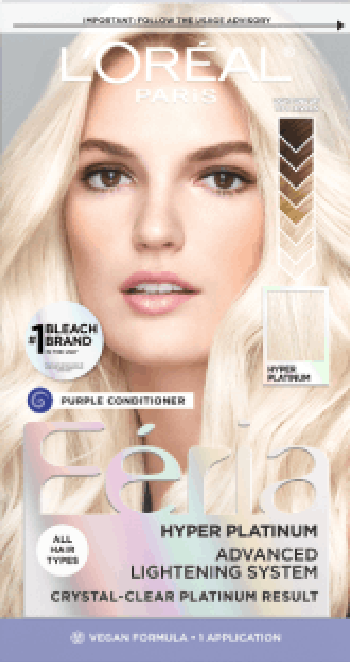
For an at-home highlighting bleach that’s inspired by the pros, lighten your strands with the L’Oréal Paris Féria Hyper Platinum Advanced Lightening System Bleach in Hyper Platinum. Then, tint your lightened strands with a sun-kissed shade like chestnut brown, honey blonde, or beige blonde.

If you’d rather have a one-step approach, snag the L’Oréal Paris Frost & Design kit. This home highlight kit includes a pull-through cap that lets you easily choose which strands to lighten without accidentally coloring any unwanted pieces. It also includes two different styling hooks, so you can create thin or thick highlights—whichever you prefer.
If you're trying to decide between foils and the cap method, foils offer precision placement and work well for fine slices and ribbon highlights; caps are beginner‑friendly and help keep spacing even for classic, blended streaks.
Another thing to consider is the developer strength, ratio, and whether the kit is suitable for roots or dark bases.

Knowing how to do highlights at home isn’t just about snagging a bleach kit—you also need to gather the necessary supplies for the job. While most at-home highlight kits include everything you need, there are some additional tools you should pick up before getting started, including a color brush, mixing bowl, bleach, peroxide, foil, a rat-tail comb, latex gloves, and a color cape or towel to drape over your shoulders as you work. Add sectioning clips, a timer, petroleum jelly to protect skin, and a handheld mirror to see the back. Have everything laid out and ready to minimize interruptions.
There’s (almost) nothing worse than dyeing your entire head only to discover you hate the color you selected. The best way to avoid this when highlighting hair at home is by conducting a strand test. This involves applying your chosen color to a small, hideable chunk of hair (usually, at the nape of your neck) to see how it turns out. Make sure your hair is clean and product-free so the color can fully penetrate the strands.
This part of the at-home highlights process can be a little time-consuming, especially if you’re bleaching, using foils, or doing a full bleach and tone. No matter which process you go with, make sure you’re timing it correctly. Also, keep in mind that light hair will lift faster than dark hair, so keep a close eye on your color as it processes. If the tester feels brittle or rubbery, pause and reassess; if it’s too light or too warm, adjust timing or tone before you proceed. Apply test product at least an inch from the scalp to mimic real processing.
You’ve chosen your home highlight kit, you’ve gathered your DIY highlights supplies, and you’ve successfully completed your strand test—it’s almost time to begin coloring. Before you do, clip your hair into a few equally-sized sections. The number of sections you’ll need depends on the length and thickness of your hair: the more hair you have, the more sections you’ll want to create.
Even if you don’t plan to highlight your entire head, clipping your strands into manageable sections helps keep everything organized throughout the process. For most heads, four to six sections work well. Follow your natural part for lived‑in placement and take thinner slices for brighter lift and shine. This is how to section hair for highlights at home in a simple, repeatable way.
Once you’ve gathered your tools and prepped your strands, you can begin highlighting your hair. Typically, you’ll want to brush the color onto individual strands with a hair dye brush, but the exact process may depend on the highlighting kit you’re using. Refer to the instructions on your chosen highlight kit and follow them to a T to ensure the best possible end result. Keep application even from mid‑lengths to ends first, then return to roots for a softer, more blended grow‑out.
We can’t stress this enough—make sure you set a timer while your at-home highlights develop. Every home highlight kit will have in-depth instructions that include timing, so make sure you read and follow them carefully. When the suggested amount of time has passed, hop in the shower and rinse or shampoo your hair as directed on your highlight kit.
Check a foil every five minutes toward the end—especially on dark, coarse, or previously colored hair—and rinse only when you’ve reached your target level to protect shine and reduce damage.
After dyeing and bleaching your strands, you may notice that they’ve turned a brassy, yellowish hue, especially if you highlighted darker brunette hair. If so, apply a toner like the L’Oréal Paris Féria Power Toner, Long Lasting Anti Brass Toner, which helps neutralize brassiness and reduce unwanted warmth in as little as five minutes. (Note that many highlighting kits come with a post-processing toner—if yours does, you can use that to tone your strands instead).
Why toning matters
The right toner refines undertone for a brighter, shinier finish and helps keep brunette and black bases from turning overly warm. Avoid common pitfalls like over‑toning to gray or choosing the wrong undertone; if in doubt, choose a sheer, slightly cooler shade and watch closely.
After toning your strands, gently squeeze any excess moisture from your strands and blow-dry or air-dry your hair. Once your strands are fully dry, you’ll be able to get a good look at how your DIY highlights turned out.
Hopefully, you’ll be more than happy with the results—but if you feel like you need a color correction, book an appointment with your stylist.
For extra shine, use a cool‑shot at the end and smooth a drop of lightweight oil or serum on mid‑lengths and ends. Before any heat styling, apply a color‑safe heat protectant, such as the L'Oréal Paris EverPure Sulfate-Free Moisture 21-in-1 Leave-In Conditioner.

Keeping your DIY highlights looking vibrant and beautiful may require tweaking your haircare routine. Read on to learn how to enhance and protect your newly highlighted strands.
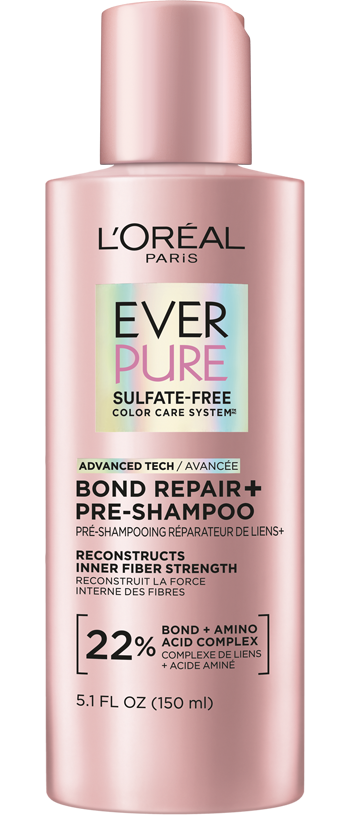
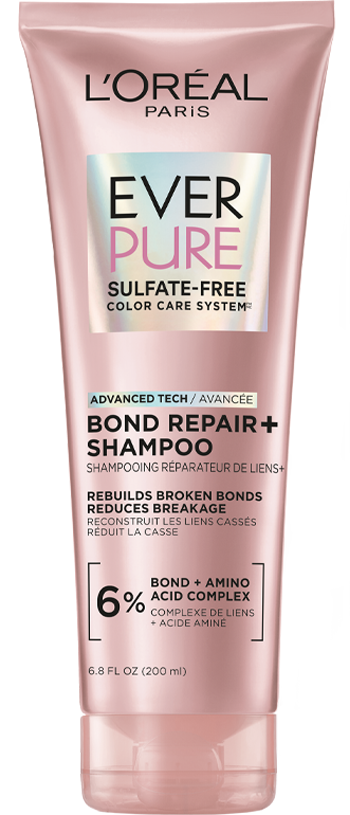
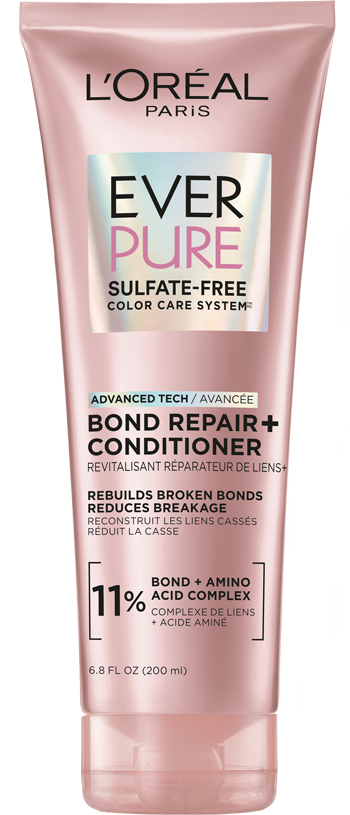
After coloring, bleaching, or doing highlights at home, hair can become weak, fragile, and damaged, so your tresses may need some extra love and care. We suggest using the L’Oréal Paris EverPure Bond Repair system to help repair your strands and give your newly-colored mane a healthier appearance. The color-safe system includes the L’Oréal Paris EverPure Bond Repair Pre-Shampoo Treatment, the L’Oréal Paris EverPure Bond Repair Shampoo, and the L’Oréal Paris EverPure Bond Repair Conditioner, which work together to help strengthen color-treated hair from the inside out. When used as a system, it also helps reduce breakage and visibly smooths damaged strands.

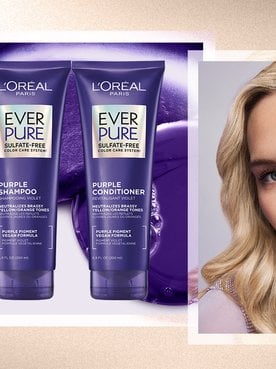
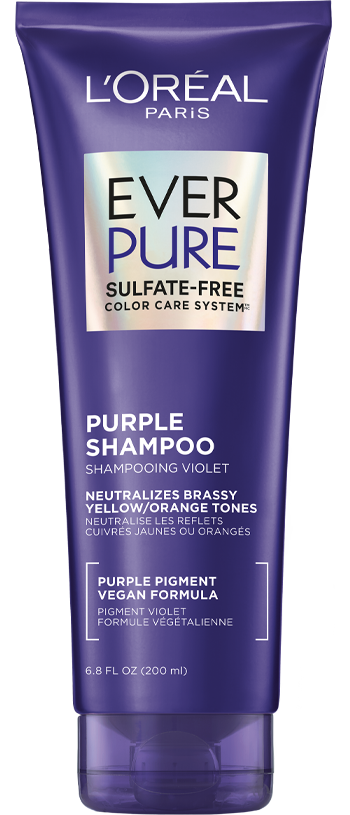
Purple shampoo is also a haircare routine must-have after doing at-home highlights. It helps cleanse, condition, and balance blonde hair while keeping it from looking too brassy. Reach for the L’Oréal Paris EverPure Sulfate Free Purple Shampoo whenever your highlights start to appear warmer than you’d like. Add UV‑protective leave‑ins when you’ll be in the sun to help preserve shine and tone.

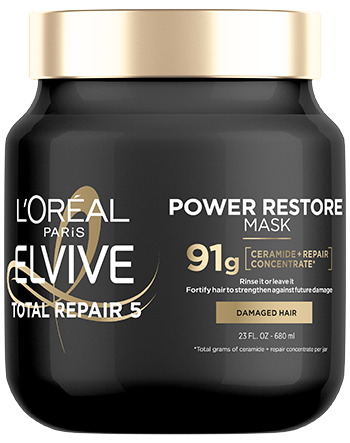
Whether you’re dyeing your entire mane or just adding a few highlights, lowlights, or babylights, it’s always a good idea to give your newly colored strands some extra moisture. To help nourish your strands, swap out your conditioner for color-treated hair with a deep conditioning treatment once or twice a week. The L'Oréal Paris Elvive Total Repair 5 Power Restore Multi-Use Treatment envelops hair in nourishment in just a few minutes.
For cool blonde highlights, consider using a purple hair mask or conditioner—like purple shampoos, these can help keep brassiness to a minimum. Try the L’Oréal Paris EverPure Sulfate-Free Anti-Brass Purple Mask Treatment, which deeply nourishes hair and neutralizes brassy yellow tones in as little as five minutes. We suggest using it no more than once per week for the best results. If your hair is coarse or very dry, alternate with a richer mask for extra slip.

After doing hair highlights at home, you may notice that your color starts to fade or look dull. That’s where a hair gloss comes in handy. Keep your DIY highlights looking fresh with the L'Oréal Paris EverPure Sulfate-Free Glossing Shampoo and Conditioner, L'Oréal Paris EverPure Sulfate-Free Glossing 5-Min Lamination Hair Mask. At‑home glossing can smooth the outer layer for added reflection and refresh tone between salon visits.


While we’re suckers for ’90s-inspired blowouts and super sleek strands. Sometimes it’s well-advised to give your at-home highlights a break from the heat and put down the hot tools.
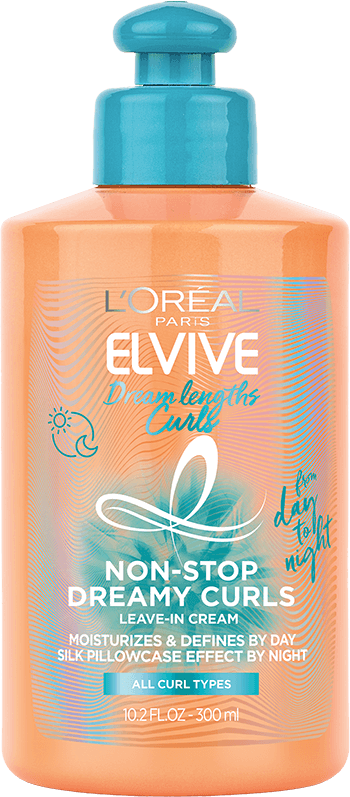
If you have curly or wavy hair, add a heat-free styling product to your routine, like the L’Oréal Paris Elvive Dream Lengths Curls Leave-In Conditioner. You can also rock your curls sans heat or opt for beachy waves.
If you absolutely must use a curling iron or flat iron on your highlighted hair, be sure you apply a heat protectant before styling, like the L’Oréal Paris Elvive Dream Lengths Heat Slayer Leave-In, to protect your strands. Limit passes, keep temperatures moderate, and finish with a cool shot for extra shine.

Next Up: Balayage: How To Add Dimension to Your Hair with Subtle Highlights
Photo courtesy of L’Oréal Paris

This site is intended for US consumers. Cookies and related technology are used for advertising. To learn more, or opt-out, visit AdChoices and our privacy policy.
Your Privacy Choices
 Notice at Collection