The Best Anti-Aging Serums for Mature Skin
Combat wrinkles, dryness, dullness, and more.




Serums are concentrated treatments that target specific skin concerns, and for mature skin the right pick depends on what your skin needs most. Retinol smooths wrinkles, hyaluronic acid replenishes moisture, vitamin C brightens dullness, and peptides support firmness. Ahead, find the best anti-aging serum for each concern and each decade, plus how to use them without irritation.
If you’re curious about adding an anti-aging serum into your routine but aren’t sure where to start, keep reading. Ahead, we’ll explain what these targeted formulas can do, when to start using one, and how to find the best anti-aging serum for your skin’s evolving needs.
Quick Guide:
What's the best anti-aging serum? There is no single "best" serum for everyone. The most effective option depends entirely on your specific skin concern and age. For dryness, choose hyaluronic acid. For wrinkles, retinol is the gold standard. For dullness, look for vitamin C. Additionally, your skin's needs shift over time; a serum that worked in your 30s may not provide enough lipid replenishment for your 50s or 60s.


There is no single best serum for aging or mature skin, because the right choice depends on your complexion's current needs. If your skin feels dry or tight, you’ll benefit from a hydrating formula with hyaluronic acid or ceramides. If dullness is your primary concern, a brightening vitamin C serum can help restore radiance. If you want to target multiple signs of aging at once, we recommend a retinol serum to smooth fine lines and firm the skin.
It is also important to remember that your biological needs change over time. The best anti-aging serum for your 30s (preservation and prevention) might not be the best anti-aging serum for your 50s or 60s (repair and lipid replenishment). Below, we have broken down the top recommendations based on specific skin concerns.
As you age, your skin naturally produces less oil, making it prone to dryness and dehydration. Using a face serum with hyaluronic acid can help replenish this moisture, giving your complexion a plumper appearance. We recommend the L’Oréal Paris RevitaLift 1.5% Pure Hyaluronic Acid Serum. This formula is scientifically designed with three molecular weights of hyaluronic acid (macro and micro) to hydrate the skin surface and absorb easily. It delivers a surge of hydration that helps mature skin look refreshed immediately.
Editor's Tip: For maximum absorption, apply this serum to slightly damp skin. This helps seal in moisture to keep your skin feeling hydrated and comfortable all day.

If you have sensitive skin, strong anti-aging actives can sometimes cause discomfort or irritation. You need a formula that restores moisture without feeling heavy or aggressive. We love the L’Oréal Paris Collagen Moisture Filler Moisture Bounce Serum. This formula delivers up to 72 hours of hydration to support plump, radiant-looking skin without harshness. Our experts recommend this as the ideal choice for those who want to address the signs of aging while keeping their skin barrier feeling calm and comfortable. It is allergy-tested and suitable for all skin types.
Editor's Tip: When introducing any new product to a sensitive routine, try a patch test on your inner arm first. It is a simple way to ensure the formula is a perfect match for your needs before full application.

Skin turnover slows down with age, leading to a buildup of dead cells that creates a dull, lackluster complexion. To brighten and refine dull mature skin, we recommend the L’Oréal Paris Age Perfect Skincare Serum Le Duo. This is a unique "two-in-one" product: one chamber contains a serum formulated with vitamin C and vitamin B3, while the other contains an anti-aging serum with collagen peptides. The hybrid formula addresses 10 key signs of aging, including dullness, helping to reveal brighter, firmer-looking skin.
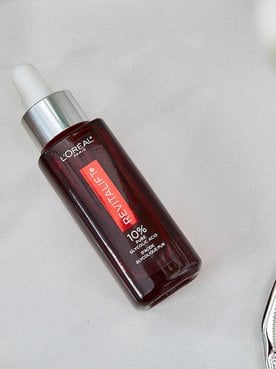
Uneven skin tone often refers to blotchiness or pigmentation, which regular exfoliation can help address. In general, chemical exfoliants tend to be gentler on mature skin than physical scrubs. We suggest the L’Oréal Paris RevitaLift 10% Pure Glycolic Acid Serum. It contains 10% glycolic acid and helps resurface uneven skin in as little as one week of daily use. Over time, it gently sloughs away dead surface cells to promote a smoother, more even complexion.
To address loss of elasticity and sagging, we recommend the L’Oréal Paris RevitaLift Triple Power Tri-Peptide Age-Defying Serum. This powerhouse formula combines a tripeptide complex with vitamin C and hyaluronic acid. It absorbs quickly to plump the look of dry, mature skin. With consistent use, it improves firmness and enhances elasticity for a more lifted look.

Retinol remains a dermatologist-favorite ingredient for addressing deep lines. According to the Cleveland Clinic, products with this ingredient can accelerate skin cell turnover and support collagen production, improving the appearance of wrinkles, uneven skin texture, and dullness.
Our top choice is the L’Oréal Paris RevitaLift Night Serum, 0.3% Pure Retinol. It is formulated specifically for aging skin to manage the appearance of deep wrinkles while remaining stable and effective.
Editor's Tip: If you are new to retinol, start by using it two nights a week and gradually increase frequency as your skin builds tolerance. This process, often called "retinization," is an essential step that helps your skin adapt.
Dark spots often appear on areas exposed to the sun, such as the face and chest. To fade them, we recommend the L’Oréal Paris Bright Reveal 12% [Niacinamide + Amino Sulfonic + Ferulic Acid] Serum. This blend combines niacinamide with amino sulfonic and ferulic acid to gently exfoliate and refine the skin. It helps reduce the appearance of dark spots and post-acne marks for a more luminous complexion.
Editor's Tip: Consistency is key when managing the look of pigmentation. Use this serum faithfully morning and night, and never skip your SPF, or the spots may return. Protecting your results with daily sunscreen is an essential step for maintaining a luminous skin tone.

A healthy skin barrier is your skin's first line of defense against aging. When it is compromised, your skin may look dry, dull, and wrinkled. To support your skin's recovery, we recommend the L’Oréal Paris Age Perfect Skin Care Cell Renewal Anti-Aging Midnight Serum. Infused with a patented antioxidant recovery complex, this formula assists the skin's natural repair process to help restore the barrier up to 1.5x faster. We suggest using it nightly when your skin is most receptive to recovery, so the formula can absorb quickly and work its magic while you sleep.

The eye area is delicate and often the first to show signs of aging. The L’Oréal Paris RevitaLift 2.5% Hyaluronic Acid + Caffeine Eye Serum addresses fine lines and puffiness simultaneously. The formula features a specialized blend of hyaluronic acid and caffeine that helps plump the appearance of crow's feet. What makes this treatment truly unique is the triple roller applicator. It includes three cooling, stainless steel balls that bend to provide a full eye contour massage. This innovative design allows the serum to absorb quickly, leaving the eyes looking refreshed, well-rested, and noticeably depuffed.
Editor's Tip: When applying, use the stainless steel applicator to draw small circles from the inner corner of your eyes out toward the temples. This gentle massage technique supports natural drainage and maximizes cooling, helping you achieve a bright, "wide-awake" look.
Layering your skincare correctly ensures that the active ingredients penetrate effectively. Here’s how to use your anti-aging serum properly.
Even the best product won't work if used incorrectly. Avoid these common pitfalls:
Your hormonal and biological profile changes drastically between decades, meaning your skin requires different levels of support as you mature. To help you choose, our experts suggest the following targeted routines:
In this decade, skin is generally resilient, but "pre-juvenation" is key. The goal is to keep the skin barrier strong and prevent future fine lines caused by dehydration and UV exposure. Hyaluronic acid is essential for 20-somethings who may experience "dehydration lines" from stress or lack of sleep. The L’Oréal Paris RevitaLift Derm Intensives 1.5% Pure Hyaluronic Acid Serum plumps the skin instantly and provides deep hydration without being heavy or greasy. Additionally, Vitamin C is a great way to defend against ‘city skin’ by protecting against pollution and oxidative stress that leads to premature aging. The L’Oréal Paris RevitaLift Derm Intensives 12% Pure Vitamin C + E + Salicylic Acid Serum protects skin, brightens, and helps refine pores and texture, which is often a concern for those in their 20s.
By 30, skin cell turnover begins to slow down, and you may notice the first persistent fine lines (crow's feet or forehead lines) and a loss of radiance. Retinol is the gold standard for your 30s. It helps accelerate cell turnover to smooth wrinkles and refine skin texture. The L’Oréal Paris RevitaLift Derm Intensives Night Serum, 0.3% Pure Retinol has an optimal concentration of retinol and is dermatologist-validated for visible results on wrinkle depth and skin texture improvements.
Expert Tip: To minimize irritation, L'Oréal Paris recommends a "ramp-up" approach—use your retinol serum twice in the first week, every other night in the second, and then nightly as tolerated.

In your 40s and 50s, peri-menopause and menopause can impact the skin, leading to significant dryness and a loss of density. The best anti-aging serum at this stage is often one that combines intense hydration with firming agents. We suggest the L’Oréal Paris RevitaLift Triple Power Tri-Peptide Age-Defying Serum to combat the loss of antioxidant protection and barrier strength. If tired-looking skin is more of a concern, try the L’Oréal Paris Age Perfect Skin Care Cell Renewal Anti-Aging Midnight Serum. It’s formulated with an antioxidant recovery complex and works with the skin's natural nighttime repair cycle, making your complexion appear firmer, smoother, and more radiant by morning.
In your 60s and beyond, your skin becomes thinner and less able to retain moisture. The best anti-aging serum for the 60s should focus on lipid replenishment and calcium. The L’Oréal Paris Age Perfect Skincare Serum Le Duo is an excellent choice here, as it provides calcium and peptides to help fortify thinning skin and manage the appearance of sagging.
For some, comfort and nourishment are the primary goals. The best serum in this case prioritizes gentle, nourishing formulas. We recommend the L’Oréal Paris Collagen Moisture Filler Moisture Bounce Serum to keep skin supple, smooth, hydrated, and glowing.
Other
To round out your routine, be sure to read our related guides in this anti-aging cluster on the Best Anti-Aging Creams and the Best Skin Care Routine for Your 50s.

This site is intended for US consumers. Cookies and related technology are used for advertising. To learn more, or opt-out, visit AdChoices and our privacy policy.
Your Privacy Choices
 Notice at Collection