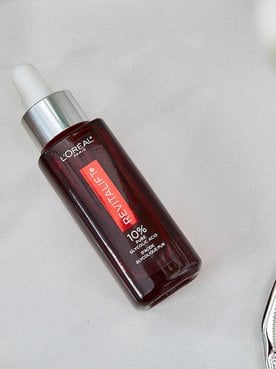
5 Noteworthy Ways Hyaluronic Acid Benefits Your Skin
This humble ingredient is a serious powerhouse.
This humble ingredient is a serious powerhouse.




Ask any dermatologist to name their favorite skincare ingredients—we can almost guarantee that hyaluronic acid will make the list (and it’d probably be near the top, too). There’s a good reason for that: Though it seems pretty unassuming, hyaluronic acid benefits rival those of even the most high-tech anti-aging ingredients. The hydrating favorite can do everything from help smooth fine lines to diminish dullness—and that’s just for starters. It also plays well with other ingredients and can be found in a wide array of products, from gentle facial cleansers to hyaluronic acid serums and moisturizers.
If you’re wondering how best to incorporate this multitasking ingredient into your routine, keep reading. Ahead, we’ll discuss the most notable benefits of hyaluronic acid for skin, explain who can use it, and introduce you to some of our favorite hyaluronic acid skincare products worth snagging on your next shopping trip.


Hyaluronic acid is a naturally occurring glycosaminoglycan (in other words, a sugar molecule) found throughout the body, including in the skin. Within the skin’s moisture barrier, its primary role is to attract and hold onto water, helping skin stay hydrated, plump, and flexible.
While your body produces hyaluronic acid, the process slows with age. This, coupled with a natural decline in collagen production, can contribute to the development of age-related skin concerns such as dryness and wrinkles. Using hyaluronic acid topically—like in a serum or moisturizer—can help replenish moisture, plump the skin, and support a supple, youthful-looking complexion.
Adding hyaluronic acid to your skincare routine can help with everything from general dullness to wrinkles and more. Below, discover five of the biggest benefits of hyaluronic acid for skin.
One of the most well-known benefits of hyaluronic acid is its ability to hydrate the skin. According to research published in Pharmaceutics, a single molecule of hyaluronic acid can hold up to 1,000 times its weight in water, making it among the most powerful humectant moisturizers used in skincare. Despite its superior hydrating abilities, however, hyaluronic acid is lightweight and non-greasy, making it suitable for all skin types (including oily skin).
Dehydration—in other words, a lack of moisture—can make fine lines and wrinkles appear more prominent. By hydrating the skin, hyaluronic acid provides a temporary plumping effect, which can make these common signs of aging less noticeable.
With age, the amount of hyaluronic acid present in the skin gradually declines. Over time, this decrease can lead not only to dryness but also to a noticeable decline in skin elasticity. Using skincare products with hyaluronic acid can help replenish moisture, boosting the skin’s elasticity to support a firmer, more youthful-looking complexion.
Dehydration and dullness often go hand-in-hand. Incorporating hyaluronic acid into your skincare routine can help prevent the skin from losing too much moisture. This, in turn, helps to support a dewy, radiant-looking complexion.
Your skin barrier is your body’s first line of defense against external stressors, and adequate hydration is a must for it to function properly. However, certain factors (such as age, harsh weather, and even certain skincare habits) can compromise this protective barrier, leaving the skin vulnerable to dryness and discomfort. Using products with hyaluronic acid can help replenish moisture within the skin, support healthy barrier function, and keep skin feeling comfortable and balanced.
One of the biggest perks of hyaluronic acid is that it’s suitable for pretty much everyone, regardless of skin type. Whether your skin is dry, oily, or somewhere in between, there’s a way to make it work for you.
Hyaluronic acid is hugely beneficial for dry skin, as products with this ingredient can help the skin attract and retain moisture. To help combat dryness, try applying the L’Oréal Paris RevitaLift 1.5% Pure Hyaluronic Acid Serum to damp skin after cleansing, then sealing in moisture with an occlusive face cream or lightweight oil.
All skin requires adequate hydration to look and feel its best, and oily skin is no exception. Hyaluronic acid can be particularly beneficial for those with oily skin, as it absorbs quickly and hydrates without weighing the skin down. If you’re prone to clogged pores or breakouts, be sure to use only non-comedogenic products—this designation means it’s unlikely to clog your pores.
Most people with sensitive skin tolerate hyaluronic acid very well. Because it’s naturally found in the body, it tends to be gentle and non-irritating. However, if your skin is highly sensitive, take care to use products formulated without artificial fragrances, alcohol, or other irritants, and patch-test new products before adding them to your routine.
From hydrating hyaluronic acid serums and moisturizers to multitasking skin tints, there’s no shortage of ways to incorporate hyaluronic acid into your routine. Keep scrolling to discover some of our very best hyaluronic acid skincare and makeup products worth adding to your cart.
This hydrating facial serum ticks all of the boxes: It’s lightweight and non-greasy; absorbs quickly without any greasy or tacky residue; and it’s suitable for all skin types. Massage a few drops into damp skin after cleansing, then layer on your favorite moisturizer. Immediately, you’ll notice your complexion appears more hydrated and dewy. With regular use, fine lines and wrinkles will appear less noticeable, and your skin will feel plumper, smoother, and firmer.

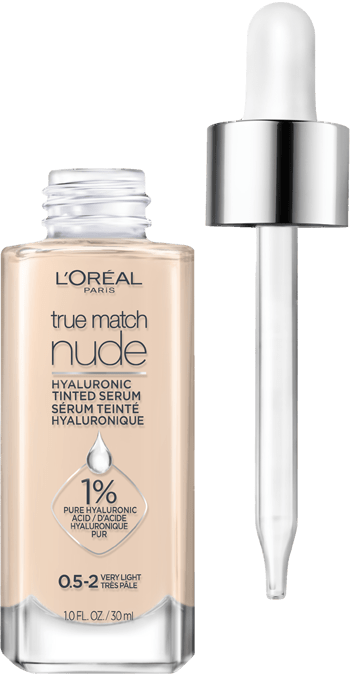
If you want to even out your complexion but don’t feel like wearing a full face of makeup, consider adding this skincare-makeup hybrid to your makeup bag. The tinted serum contains mineral pigments and delivers sheer, luminous coverage while helping to visibly brighten and hydrate the skin over time. It comes in 14 flexible shades and blends seamlessly into a wide range of skin tones, making it the perfect go-to on no-makeup makeup days.
Combat the visible signs of aging with this potent serum, which combines hyaluronic acid with a tri-peptide complex and vitamin C for instant and long-term results. After a single use, the lightweight, non-comedogenic serum will leave your skin feeling softer and more hydrated. Continued use over time, meanwhile, helps visibly reduce wrinkles, firms the skin, and enhances radiance for a youthful-looking complexion.

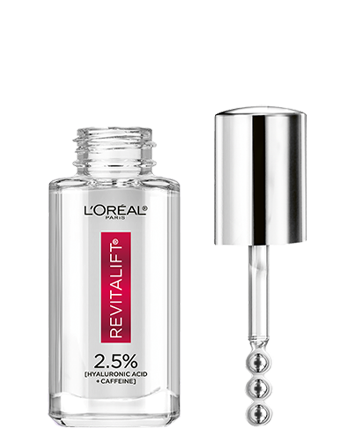
The skin around your eyes is thin, and as a result, it’s often the first to show the signs of aging. This hyaluronic acid serum benefits this delicate area in a couple of ways. It’s made with hyaluronic acid and caffeine and helps hydrate, plump, and de-puff to diminish the appearance of crow’s feet wrinkles and under-eye bags. It’s also equipped with a cooling stainless steel rollerball applicator to massage the eye area for additional de-puffing benefits. Use it alone or layer it under a richer eye cream for added hydration if you have especially dry skin.

As we mentioned earlier, regular hydration is a must for all skin types, not just dry skin. If you’re on the oilier side and need a lightweight moisturizer that won’t leave your skin feeling greasy, this water-based option is an excellent choice. It combines hyaluronic acid with ceramides and provides deep (but fast-absorbing) hydration. Use it regularly, and you’ll notice your skin looks smoother, plumper, and overall more youthful.

Whether you’re dealing with fine lines and wrinkles or simply want an anti-aging moisturizer to help protect your skin from future damage, this is one formula we’ll always recommend. It’s made with hyaluronic acid, vitamin C, and pro-retinol and works over time to help firm the skin, smooth the look of wrinkles, and even the skin tone. Plus, it’s infused with broad-spectrum SPF 30 sunscreen to help shield your skin from damaging UV rays.

Your lips are skin, too—and they require moisture just like every other part of your body. This lip oil, infused with hyaluronic acid and tri-peptides, gives them just that. The glossy formula helps lock in moisture for up to 24 hours and leaves the lips looking full, plump, and hydrated. Choose from 10 semi-sheer shades, from glossy nude-pinks to rich, full-bodied berries.

If you like the full-coverage finish of lipstick but want to give your lips some love, try this lip stain serum. The hyaluronic acid-infused formula applies like a gloss, providing intense color payoff with a juicy, glossy finish. After the glossy sheen wears off, you’ll be left with a lasting stain that wears for up to 12 hours. You can even use it in place of blush for a soft, natural-looking flush.
Generally speaking, hyaluronic acid can be used every day. However, it’s always a good idea to check the instructions on your chosen product, as many contain other ingredients—such as chemical exfoliants or retinoids—that are best used more sparingly. If you’re still unsure when (or how) to add a specific product to your routine, consult your dermatologist.
As a standalone ingredient, hyaluronic acid is generally considered safe for sensitive skin. However, many products with hyaluronic acid contain other ingredients or additives that can be irritating for those with more reactive complexions. To err on the side of caution, always seek out products designed specifically for sensitive skin and avoid anything with added fragrances, dyes, or alcohols. You should also patch-test any new products on a discreet area (like behind your ear) before adding a new product to your everyday routine.
Hyaluronic acid is non-comedogenic, which means it won’t clog your pores. But that doesn’t mean that every product containing hyaluronic acid is non-comedogenic—some may contain oils or other ingredients that can clog your pores. If you’re acne-prone, stick to products labeled oil-free or non-comedogenic, as these descriptions mean they’re unlikely to cause or contribute to breakouts.
Hyaluronic acid is a naturally occurring sugar molecule that helps the skin attract and retain moisture. Collagen, by contrast, is a protein responsible for giving your skin its structure and shape. Both can help hydrate the skin, and both can have a place in your anti-aging skincare routine.
Next Up: What Is Dimethicone Used For In Beauty Products?
Photo courtesy of L’Oréal Paris

This site is intended for US consumers. Cookies and related technology are used for advertising. To learn more, or opt-out, visit AdChoices and our privacy policy.
Your Privacy Choices
 Notice at Collection