In this article
- What Is The Skin Barrier?
- What Causes a Damaged Skin Barrier?
- How Do You Know If Your Skin Barrier Is Damaged?
- How To Repair a Damaged Skin Barrier
- How To Protect and Strengthen Your Skin Barrier
- How Long Does It Take To Repair Your Skin Barrier?
- Best Ingredients For Skin Barrier Repair
- Natural Ways To Support Skin Barrier Repair
- Skin Barrier Repair Routine (AM/PM)
- Common Mistakes That Can Damage The Skin Barrier
- How To Repair Your Moisture Barrier After Using Retinol
- Clinical Results: What To Expect Over Time
- How Barrier Repair Ingredients Work (Deep Dive)
- Frequently Asked Questions
- Product Recommendations
Faint lines and wrinkles that appear under your eyes when you smile or squint are completely normal, but if they remain even when your face is resting, you may find yourself wondering how to soften their appearance. The reality is, fine lines and wrinkles are a natural part of the skin aging process. However, proper skincare and careful habits (including daily use of broad-spectrum sunscreen) can help soften their appearance. Ahead, we’ll explain why fine lines and wrinkles around the eyes form, share tips on minimizing their appearance, and introduce you to our best products for caring for the delicate eye area.
Quick Guide
To soften the appearance of eye lines, under-eye lines, and under-eye creases, adopt a routine focused on hydration, protection, and renewal. Many professionals suggest applying hyaluronic acid to plump the area, using a targeted eye cream with retinol or caffeine to smooth texture, and applying a broad-spectrum sunscreen (with an SPF of at least 30) daily to help prevent sun damage. Consistent moisture and gentle exfoliation can also help address wrinkly under-eye skin and maintain a luminous, youthful look.
The Real Reasons Under-Eye Wrinkles and Fine Lines Appear
A luminous and refined eye area is often considered the centerpiece of a healthy-looking complexion. However, because this delicate zone is the most expressive part of the face, it’s also one of the first places where fine lines can appear. Understanding the unique biology of this area is the first step toward maintaining youthful-looking skin.
If you’re asking yourself why you have lines under your eyes, the answer involves looking at how the skin is built and what it faces every day. The skin around the eyes is significantly thinner and more delicate than the rest of the face. In fact, research shows this delicate zone often measures less than 1mm in thickness, while the skin on the cheeks and forehead can reach 2mm or more. That thinness means it can show dehydration, fatigue, and early signs of aging sooner.
To make sense of what causes wrinkles, professionals typically group the main influences into a few key pillars:
- Natural aging: As we mature, the skin's internal scaffolding begins to shift. This is primarily due to the natural loss of collagen and elastin, the structural proteins that keep the surface looking firm and resilient.
- Repeated muscle contractions: Our eyes are the most expressive part of our face. Every time we smile, squint, or blink, the small muscles around our eyes engage. Over time, these repetitive movements can etch dynamic lines into the skin that eventually become static.
- Sun damage: Studies show that UV exposure remains the primary cause of premature aging. It triggers a process that breaks down collagen fibers and can lead to a leathery texture or wrinkly under-eye skin.
- Pollution: Environmental stressors and free radicals can compromise the skin barrier. This oxidative stress often leads to a loss of vibrancy and accelerates the appearance of lines under the eyes.
- Genetics: Your DNA provides the blueprint for how your skin ages. While we can support the skin topically, genetics play a foundational role in the timing and depth of under-eye creases.
- Dehydration: When moisture escapes from the skin, the surface can appear rough or crepey. This lack of hydration instantly accentuates existing lines, making them appear deeper and more defined.
When Do Under-Eye Lines and Fine Wrinkles First Begin to Show?
While every individual is unique, the first subtle shifts in skin elasticity often become a point of reflection as one approaches 30. This is the era when wrinkles under the eyes typically begin to manifest. However, for those in their 20s beginning a skincare routine, it’s crucial to be aware that fine lines under the eyes can appear earlier, depending on lifestyle factors.
Experts typically advise that the periorbital area (in other words, the eye area) is the first region to betray the effects of environmental stress. Clinical research conducted by our L'Oréal Paris scientists reveals a critical shift in the skin's architecture, showing that natural hyaluronic acid levels can begin to diminish as early as age 25. This early biological transition is one of the primary reasons the first signs of eye lines manifest before your third decade.
Although biology sets the stage, it is not the only factor. Lifestyle issues like chronic dehydration, unprotected sun exposure, and smoking can significantly accelerate this timeline. If you are starting to notice fine under-eye lines, consider your daily habits and hydration levels as potential accelerating factors that require a strategic, haut de gamme (high-end) intervention.
Under-Eye Wrinkles vs. Fine Lines: The Subtle Differences Explained
Distinguishing between fine lines and a more structural wrinkle in the under-eye area is crucial for choosing the right ritual. While they may appear similar at a glance, their origins require a different level of expertise and targeted ingredients.
- Fine lines: These are shallow, surface-level creases often influenced by the exposome. This term refers to the sum of environmental factors your skin encounters daily. These are usually the first eye lines to appear, resulting from temporary dehydration or the very beginning of the natural hyaluronic acid decline our scientists identified. With a dedicated infusion of moisture, these lines can often be softened and restored to a smoother, more luminous state.
- Wrinkles: These represent deeper, more permanent folds within the skin’s architectural landscape. Caused by a significant loss of collagen and the repetitive movement of the small muscles around your eyes, these require more potent ingredients. To address these deeper under-eye creases, experts typically advise incorporating a serum with pro-retinol to support cell renewal and structural resilience.
Feature Fine Lines Wrinkles Depth Shallow surface layer Deeper structural folds Primary Cause Dehydration or early aging Collagen loss and repeated movement Visibility Often softens when skin is hydrated Visible even when the face is resting How To Reduce Wrinkles Under and Around the Eyes for a Refreshed Appearance
To address under-eye wrinkles, one must adopt a strategy that combines immediate plumping with long-term repair. Inspired by Parisian skincare expertise, this six-step process provides a highly concentrated formula for a rejuvenated gaze.
- Prioritize intense hydration: Moisture, moisture, and more moisture. Think of hydration as the essential foundation for a smooth, glass-like surface. Using ingredients like hyaluronic acid helps draw hydration into the skin, instantly plumping the area and bestowing a radiant glow.
- Use a targeted eye cream: Treat your eyes to a bespoke experience. Regular moisturizers can be far too heavy for this delicate anatomical landscape, whereas a dedicated eye cream is precisely formulated to deliver high-performance ingredients with a featherlight touch.
- Introduce retinol with care: Consider this the gold standard for a graceful transformation. Introducing a retinol specifically crafted for the eye area helps thicken the skin and smooth texture over time without overwhelming the thin 0.5mm barrier.
- Commit to daily sun protection: Your most powerful accessory is a broad-spectrum SPF. Applying a protective shield of SPF 30 or higher every morning prevents UV rays from degrading your collagen, allowing your skin's natural repair processes to flourish.
- Incorporate gentle exfoliation: Removing dead skin cells allows your treatments to absorb better, but remember that the under-eye area requires very mild chemical exfoliants to avoid irritation or discomfort.
- Adopt healthy lifestyle habits: Your healthiest glow starts from within. Prioritizing sleep allows the skin to repair its internal scaffolding, while hydrating with water and water-rich foods supports the work of your topical serum.
The Best Under-Eye Skincare Routine to Restore Smoothness and Radiance
Consistency is the secret to a successful skincare routine. To maintain a truly luminous look, follow this editor-approved morning and evening ritual.
Editor's Tip: Your ring finger is your most sophisticated tool. Since it naturally has the lightest touch, it allows you to pat your eye cream or serum into the skin without excessive pulling or tugging. Apply product moving from the inner corner outward to avoid pulling this delicate area.
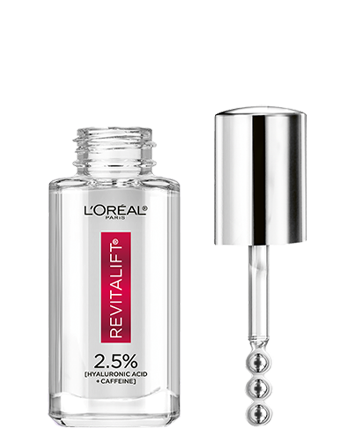
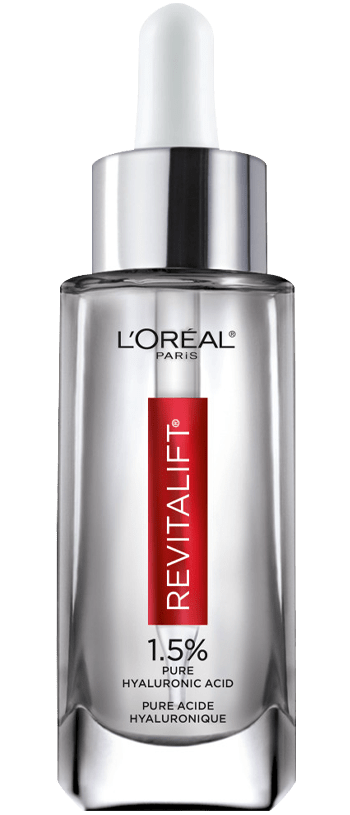
Step Morning Ritual Evening Ritual The Expert Detail 1 Wash your face with a hydrating cleanser, like the L'Oréal Paris RevitaLift Radiant Smoothing Cream Cleanser Remove sunscreen, makeup, and surface debris with the L'Oréal Paris RevitaLift Radiant Smoothing Cream Cleanser Gently massage into the skin to purify the surface while preserving the essential moisture barrier. 2 Apply a plumping treatment, such as the L'Oréal Paris RevitaLift Derm Intensives 1.5% Pure Hyaluronic Acid Serum — Apply to damp skin using firm, upward pressing motions to encourage a bounce-back effect and deep hydration. 3 Smooth on a cooling eye treatment, such as the L'Oréal Paris RevitaLift Derm Intensives 2.5% Hyaluronic Acid + Caffeine Eye Serum (pictured below) Apply a nighttime eye cream, such as the L'Oréal Paris Age Perfect Skin Care Midnight Eye Opener OR L'Oréal Paris RevitaLift Triple Power Eye Treatment Use the cooling applicator in the morning to depuff, then transition to a rich overnight patting technique to firm the contour. 4 Finish with an SPF moisturizer such as the L'Oréal Paris RevitaLift Triple Power Anti-Aging Moisturizer with SPF 30 — Smooth the moisturizer over the face and neck in an outward motion to hydrate the skin and seal in moisture. 6 — Layer on a resurfacing night treatment such as the L'Oréal Paris RevitaLift Derm Intensives Night Serum, 0.3% Pure Retinol Apply with a light touch to clean, dry skin to facilitate gentle overnight exfoliation and resurfacing. 7 — Finish with a barrier-supporting cream, such as the L'Oréal Paris Age Perfect Skin Care Cell Renewal Midnight Cream Layer this final veil over your treatments to seal in active ingredients and provide deep nourishment while you rest.
Dry Skin Under the Eyes: Why It Makes Fine Lines Stand Out
It’s crucial to recognize the connection between hydration and the skin’s integrity. The progression of dry skin under the eyes leading to wrinkles is a well-documented physiological cycle. When the moisture barrier is dehydrated, skin cells lose their volume, and the texture becomes rougher, making fine lines significantly more visible.
Furthermore, chronic dryness impairs the skin's ability to repair itself. A compromised moisture barrier is more susceptible to the cumulative environmental factors that accelerate aging. To maintain a luminous glow and resilient texture, many professionals suggest:
- Applying a hydrating eye cream twice daily to sustain essential hydration.
- Layering a hyaluronic acid serum, like the L'Oréal Paris RevitaLift Derm Intensives 1.5% Pure Hyaluronic Acid Serum, under your moisturizer to anchor moisture and support a bounce-back texture.
- Switching to a gentle cream cleanser that purifies the skin without stripping essential natural oils.
Editor’s Tip: Consider utilizing a humidifier in the bedroom to prevent moisture loss during the skin’s nightly repair cycle. This refreshing addition to your environment helps maintain a glass skin finish by ensuring skin retains hydration overnight, supporting a smoother, more luminous look by morning.
The Ingredients That Make a Visible Difference for Under-Eye Wrinkles
Selecting the right ingredients is essential for achieving visible results. Many professionals turn to these specific actives when targeting under-eye lines and wrinkles.
| Ingredient | Primary Benefit | Best For | L'Oréal Paris Product |
| Hyaluronic Acid | Plumps, hydrates, and smooths fine lines | Fine lines and dehydration; all ages | L'Oréal Paris RevitaLift Derm Intensives 2.5% Hyaluronic Acid + Caffeine Eye Serum
L'Oréal Paris RevitaLift Derm Intensives 1.5% Pure Hyaluronic Acid Serum |
| Caffeine | Depuffs, firms, and reduces puffiness | Puffy under-eyes and wrinkles | L'Oréal Paris RevitaLift Derm Intensives 2.5% Hyaluronic Acid + Caffeine Eye Serum |
| Pro-Retinol / Retinol | Supports cell turnover and reduces deep wrinkle appearance | Moderate to deep wrinkles; best for 30+ | L'Oréal Paris RevitaLift Derm Intensives Night Serum, 0.3% Pure Retinol
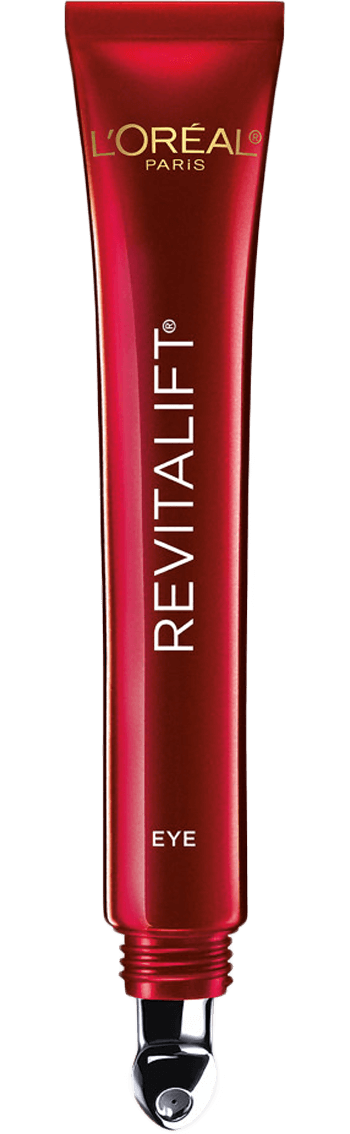
L'Oréal Paris RevitaLift Triple Power Eye Treatment (pictured below) |
| Vitamin C | Brightens and provides antioxidant protection | Dark circles and fine lines | L'Oréal Paris RevitaLift Triple Power Eye Treatment |
| Antioxidants | Fights environmental aging factors | Sun and pollution damage | L'Oréal Paris Age Perfect Skin Care Midnight Eye Opener |
| SPF / UV Filters | Helps prevent new wrinkle formation | Daily protection for all ages | L'Oréal Paris RevitaLift Triple Power Anti-Aging Moisturizer with SPF 30 |
How To Prevent Under-Eye Wrinkles and Maintain a Youthful Eye Area
Prevention remains the most effective approach to preserving the skin’s architectural integrity. To maintain a luminous and youthful eye area, our routine experts recommend adopting these lifestyle habits:
- Wear sunglasses: Beyond a style statement, UV-blocking sunglasses are a functional necessity. They prevent the repetitive squinting that leads to dynamic lines and provide a physical barrier against the primary catalyst of collagen loss.
- Remove makeup with a gentle touch: Skincare professionals suggest dissolving mascara and concealer with a gentle cream or oil rather than scrubbing. This preserves the thin 0.5mm barrier and prevents mechanical stress that can lead to premature sagging.
- Prioritize quality sleep: Clinical research shows that the skin’s most intensive repair occurs during a seven to nine-hour rest cycle. This period allows for optimal cell renewal and the restoration of the moisture barrier, ensuring you wake with a refreshed complexion.
- Avoid constant eye rubbing: Professionals typically advise treating seasonal allergies promptly. Constant rubbing can cause micro-inflammation and damage delicate capillaries, often resulting in a loss of firmness and a tired appearance.
- Hydrate from within: Maintaining a consistent water intake supports skin elasticity and ensures your topical products work on a well-prepared, hydrated foundation.
How To Exfoliate the Under-Eye Area While Protecting Delicate Skin
Understanding how to exfoliate the under-eye area requires much delicacy, as this skin is the thinnest on the face. One must avoid harsh scrubbing, which can cause micro tears and accelerate the appearance of aging. Instead, a more refined approach is advised.
- Choose the right product: It’s usually suggested that you avoid physical scrubs with beads or shells. Many professionals turn to very mild chemical exfoliants, such as low-concentration alpha-hydroxy acids (AHAs) like glycolic or lactic acid, or enzymatic exfoliants that offer a refined finish without mechanical stress.
- Frequency: To maintain the skin's integrity, limit exfoliation in this area to one or two times per week, max.
- Technique: A common approach is to pat the product gently around the orbital bone using the ring finger. This ensures a light touch and prevents unnecessary tugging of the fragile skin.
- Consider your routine: Our skincare experts recommend steering clear or using strong retinoids and exfoliants simultaneously in this delicate area to prevent irritation and maintain a luminous, healthy barrier.
Common Mistakes That Can Make Under-Eye Wrinkles More Noticeable
Even with a dedicated ritual, certain habits can inadvertently work against the skin's architectural integrity. To maintain a truly luminous and refined finish, many professionals suggest avoiding these common oversights:
- Relying solely on facial moisturizers: While a general cream is essential, the periorbital area often requires a more specialized treatment. Eye-specific formulas are designed with a specific molecular weight to penetrate the thin 0.5mm skin more effectively, providing the targeted actives needed to address fine lines.
- Tugging during application: It is recommended to avoid using any downward pulling motions or excessive pressure when applying your eye treatments, as this can stretch the skin and accelerate the breakdown of elastin, which is vital for a bounce-back texture. Just a light, dabbing motion with the ring finger is truly the best way to apply eye product.
- Over-exfoliating the eye contour: While a gentle enzymatic formula can restore radiance, using acids more than 1 to 2 times per week in this area can lead to chronic dryness. This strips the natural lipids and makes fine lines significantly more visible.
- Using heavily fragranced products: Many professionals turn to fragrance-free options for the eye area. Synthetic fragrances can trigger microinflammation and watering, leading to involuntary rubbing that disrupts the delicate moisture barrier.
Editor’s Tip: Back sleeping is not just another random beauty trend; it’s a “no face-smoosh” beauty tweak worth trying if it’s comfortable for you. Research shows that sleeping in a supine position helps minimize nightly facial compression and friction that can contribute to the look of “sleep lines” over time. For support, try a thin pillow that keeps your neck neutral, plus a pillow under your knees to help maintain comfortable spinal alignment. If congestion is a concern, gently elevate your head and shoulders to breathe more easily.
Who Is Most Prone to Under-Eye Lines?
Under-eye lines are a universal experience in the skin’s journey, yet they manifest more visibly within certain biological and environmental contexts. Understanding these predispositions allows for a more targeted approach to preservation.
- The evolution of age groups: Clinicians typically observe that deeper wrinkles tend to set in during the 40s and 50s as the skin’s architectural support naturally matures. Fine lines, however, can emerge as early as the late 20s or early 30s as a result of the natural decline in hyaluronic acid and collagen.
- The influence of skin types: Those with dry skin are more prone to showing early fine lines, as a lack of natural lipids can diminish the skin's luminous bounce. While oily skin types may notice these lines later, they are still subject to the structural shifts that lead to deeper folds.
- The genetic signature: Our heritage plays a vital role in our skin's future. If a family history of under-eye circles or early lines exists, there may be a genetic predisposition to these traits, making early intervention with a targeted formula an essential strategy.
- Lifestyle and the exposome: Clinical research supports the idea that external factors, such as sun exposure and smoking, are the primary drivers of premature aging. Those who frequently enjoy the sun without a daily UV shield may see lines significantly earlier than those who prioritize a protective ritual.
Frequently Asked Questions
What is the best way to address under-eye wrinkles and lines?
An effective strategy combines hydration, stimulation, and protection. Use hyaluronic acid to plump the skin, retinol to encourage cell turnover, and daily SPF to prevent the architectural degradation caused by the exposome.
What causes wrinkles under the eyes?
The presence of lines may result from dry skin, genetic heritage, or the natural maturation of the skin. If these appear at a younger age, they are often simple dehydration lines or genetic creases that benefit from a targeted skincare approach.
When do under-eye fine lines typically become visible?
Fine lines can emerge in the mid to late 20s as natural hyaluronic acid levels begin to decline. Deeper wrinkles typically become more noticeable in the 30s as the skin’s structural support begins to shift.
How can I address the appearance of under-eye wrinkles?
To visibly soften the appearance of wrinkles, many professionals suggest a ritual centered on cell renewal and barrier resilience. An effective strategy includes incorporating a routine powered by pro-retinol and peptides. Furthermore, clinical research indicates that ensuring 7 to 9 hours of quality sleep supports the skin's natural repair cycle.
Is it common to observe wrinkles under the eyes at 30?
It is quite common to see the first signs of fine lines around the age of 30. This is a significant biological milestone where natural collagen production begins to decrease and the cumulative impact of the exposome, such as earlier sun exposure, starts to manifest on the skin’s surface. Many professionals view this as the ideal time to transition toward a more sophisticated ritual, incorporating targeted actives to preserve a luminous and youthful complexion.
How do you get rid of lines under your eyes as a teenager?
It is important for teenagers to understand that lines at this age are typically a sign of lifestyle factors or dehydration rather than structural aging. Experts typically advise avoiding potent anti-aging actives like strong retinol, which can be far too aggressive for young, delicate skin. Instead, an effective strategy focuses on the fundamentals of skin health: maintaining a consistent hydration ritual, ensuring restorative sleep, and prioritizing a daily UV shield.
What defines under-eye smile lines?
Often referred to as crow’s feet, these are dynamic wrinkles that naturally emerge during expression. While they initially appear only when you smile, repetitive movement and a decline in elasticity can cause them to become static lines. Experts typically suggest a hydrating formula to maintain a refined finish and preserve the skin's natural resilience.
What is the best eye cream for under-eye wrinkles?
The ideal choice depends on your specific skin needs. For those looking to address puffiness and fine lines, many professionals recommend a formula enriched with caffeine and hyaluronic acid. For a focus on deeper wrinkles, an effective strategy is to look for pro-retinol or peptides. We invite you to explore our curated selection of expert-approved products below to find your perfect match.
Are under-eye wrinkles reversible?
Fine lines caused by dehydration are often reversible through intensive moisture and barrier support. While deep, static wrinkles cannot be fully erased with topical skincare alone, their appearance can be significantly softened and reduced through an expert ritual. By prioritizing hydration and cellular support, you can achieve a more refined finish and restore a luminous glow.
How long does it take for under-eye wrinkle treatments to work?
Hydrating ingredients like hyaluronic acid work instantly to plump skin and restore a luminous glow. For long-term repair, ingredients such as retinol typically require a dedicated 12-week ritual or more to reveal significant structural changes. However, with a consistent expertise-led routine, improvement in skin quality can often be observed within 1 to 2 weeks.
L'Oréal Paris Advanced Eye Products for Wrinkles Under the Eyes
- L'Oréal Paris RevitaLift Derm Intensives 2.5% Hyaluronic Acid + Caffeine Eye Serum: Plumps skin and depuffs eyes with a cooling triple roller applicator. Editor's Tip: Keep the bottle in the fridge for an extra cooling effect.
- L'Oréal Paris Age Perfect Skin Care Midnight Eye Opener: Rich in antioxidants to repair the skin barrier overnight. Editor's Tip: Use this in the PM to support recovery while you sleep.
- L'Oréal Paris RevitaLift Triple Power Eye Treatment: Formulated with pro-retinol, vitamin C, and hyaluronic acid for all-around correction. Editor's Tip: The metal tip helps soothe puffiness upon application.
- L'Oréal Paris Wrinkle Expert 55+ Anti-Wrinkle Eye Treatment: Designed specifically for mature skin to strengthen thinning skin. Editor's Tip: Pat this on gently after your serum.
- L'Oréal Paris RevitaLift Derm Intensives 1.5% Pure Hyaluronic Acid Serum: Intense hydration for the whole face, including the eye area. Editor's Tip: Apply to damp skin to lock in maximum moisture.
- L'Oréal Paris True Match Radiant Serum Concealer: A concealer that provides coverage while hydrating like a serum. Editor's Tip: Use a small amount to avoid settling into lines.
Next Up: How To Get Rid of Eye Bags: 14 Tricks That Actually Work
Photo courtesy of L’Oréal Paris