Why Is Sulfate-Free Shampoo the Best Choice for Your Hair
A formula for every hair goal




It is easy to assume that your shampoo must lather to work, but foam does not necessarily mean cleaner hair. Switching to a sulfate-free shampoo can be worth considering when you are managing color fade, frizz, dryness, or an easily weighed-down scalp.
Sulfate-free is not universally “better,” yet the right formula can work well across many hair types and textures, fromfine, oily strands to thick,textured hair. Ahead, we’ll break down what sulfates are and share five reasons you may want to make the swap, along with a few of our best sulfate-free shampoo picks to refresh your routine.
According to the Cleveland Clinic, sulfates are cleansing ingredients that help shampoo lift away oil, sweat, and product residue so it can rinse away more easily. You will often see them listed as surfactants, which is a category of ingredients that help water mix with oils and buildup during cleansing.
Two common sulfates you may spot on an ingredient list include:
Because sulfates are great at lifting oils, they can be a helpful choice when you want a more thorough reset, especially on days when your hair feels coated by styling products. If you are shopping for a gentler option, look for a sodium lauryl sulfate free shampoo or labels that say "sulfate and paraben free shampoo", then pay attention to how your scalp and lengths feel over a few washes. This sets up the main trade-off: a stronger cleanse can feel refreshing for some routines, while others may prefer a gentler wash day that leaves hair feeling softer.
Sulfates are not inherently “bad,” but they can feel too strong for some hair types and routines. In fact, according to research published in the International Journal of Trichology, anionic surfactants like SLS and SLES are very good at removing oil and buildup from the hair and scalp. However, because they are strong cleansers, sulfates aren't for everyone.
If your color fades quickly, your hair feels dry at the ends, or your texture seems harder to manage after wash day, a sulfate-free shampoo can help you cleanse while keeping the lengths from feeling over-washed.
Because sulfates are strong cleansers, some people notice their hair feels a little drier or less soft after washing, especially along the lengths. If that sounds familiar, asulfate-free shampoo and conditioner can be a comfortable swap that still cleanses, just with a gentler, less “squeaky” after-feel.
The following are common scenarios, not strict rules, and the best routine depends on your hair type, how often you wash, and how much product you use between washes. Here are five reasons you may want to make the switch.
The most common reason people switch to sulfate-free shampoos is to preserve their salon orDIY color. Sulfates can be very harsh on color and may cause your new hue to fade more quickly than you’d like. Switching to a sulfate-free shampoo for colored hair, meanwhile, can help to prolong your color’s vibrancy.
Try a routine like the L’Oréal Paris EverPure Sulfate Free Bond Repair Shampoo with Citric Acid and the L’Oréal Paris EverPure Sulfate Free Bond Repair Conditioner with Citric Acid when your color-treated hair feels a bit fragile or dry after highlighting, bleaching, or frequent heat styling.
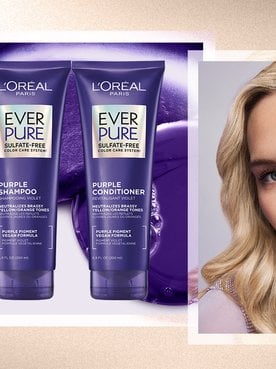
If brassiness is part of your color story, rotating in a toning formula can also support a fresher-looking finish. Try the L’Oréal Paris EverPure Sulfate Free Purple Shampoo for Toning Blonde Bleached Hair on the days when your blonde, highlights, or silver tones start to look warmer than you like, then follow with the L’Oréal Paris EverPure Sulfate-Free Toning Purple Conditioner.



When a shampoo lifts away a lot of oil at once, hair can feel rougher, and the cuticle can sit less flat, which is whenfrizzand a loss of shine tend to be more noticeable. So when frizz shows up, it can be a sign your hair is feeling a bit dry, especially in humidity or after heat styling. A sulfate-free shampoo routine can be a helpful swap if you want a cleanse that cares for your hair.
Try theL’Oréal Paris EverPure Sulfate Free Frizz Defy Shampoo with Marula Oil and theL’Oréal Paris EverPure Sulfate Free Frizz Defy Conditioner with Marula Oil to help hair feel smoother and easier to control, especially when your strands tend to puff up in damp weather.
For a sleeker finish, try theL’Oréal Paris EverPure Sulfate Free Iron Sleek Smoothing Shampoo and follow with theL’Oréal Paris EverPure Sulfate Free Iron Sleek Smoothing Conditioner. This pair is a great fit when you heat style and want hair to feel more manageable and less prone to flyaways.

If you prefer a high-shine routine, try the L’Oréal Paris EverPure Sulfate Free Glossing Shampoo and the L’Oréal Paris EverPure Sulfate Free Glossing Conditioner, then finish with the L’Oréal Paris EverPure Sulfate Free Glossing 5-Min Lamination Hair Mask. When used as a system, the trio helps cleanse, moisturize, and smooth the hair while sealing the hair fibers to avoid frizz.

Dry hair often needs a routine that cleanses the scalp without over-cleansing the lengths, so your roots feel fresh while your ends stay comfortable. That balance matters even if your scalp is oily, since dryness can still show up through mid-lengths and ends from coloring, heat styling, or your natural texture. A sulfate-free shampoo and conditioner pair can help lengths feel softer, especially if your hair is textured, curly, heat-styled, or color-treated.
For a moisture-focused wash day, use the L’Oréal Paris EverPure Sulfate-Free Moisture Shampoo and the L’Oréal Paris EverPure Sulfate-Free Moisture Conditioner to help hair feel more hydrated. After you towel-dry, mist the L’Oréal Paris EverPure Sulfate-Free 21-in-1 Color Caring Spray Leave In through lengths and ends, then comb gently for even distribution, leaving your hair well hydrated, nourished, and very manageable.

Buildup can happen when you layer dry shampoo, styling creams, oils, or even heavy conditioners. Given their ability to remove dirt, oil, and other residue, it’d be easy to assume thatclarifying shampoos have to contain sulfates to be effective. However, a sulfate-free formula can still cleanse effectively, especially when you apply shampoo to the scalp and rinse thoroughly.
If your hair looks flat at the roots or feels coated, rotating in a sulfate-free clarifying shampoo can help lift oil and residue without making every wash day feel intense, which can be a nice option for color-treated hair. Use the L’Oréal Paris EverPure Sulfate-Free Clarifying Shampoo with Antioxidants when you want a clearer, refreshed feel without overdoing it. Follow with the L’Oréal Paris EverPure Sulfate-Free Restoring Conditioner with Antioxidants to help hair feel soft again after a deeper cleanse.

One reason the best sulfate-free shampoo lists keep growing is that there are now many targeted options, from volume support to curl definition. If you have oily roots, a sulfate-free shampoo for greasy hair can work well when it is paired with the right conditioner placement and an occasional clarifying step. If scalp flakes are part of your routine, look for a sulfate-free dandruff shampoo designed for scalp comfort, and avoid aggressively scrubbing.
For fine hair that needs lift, try the L’Oréal Paris EverPure Volume Sulfate Free Shampoo For Reviving Fine Hair and the L’Oréal Paris EverPure Volume Sulfate Free Conditioner For Reviving Fine Hair. This duo helps cleanse without a heavy after-feel. For the right effect, keep the conditioner mainly on mid-lengths and ends, and use a lighter touch near the roots to help maintain bounce.
If your goal is thicker-looking hair, wash with the L’Oréal Paris EverPure Thickening Shampoo and follow with the L’Oréal Paris EverPure Thickening Conditioner. This pair is a good fit when you want hair to feel more supported from root to tip and look fuller through the lengths.
For curls, use theL’Oréal Paris EverPure Curl Shampoo andL’Oréal Paris EverPure Curl Conditioner when your curls feel thirsty or start losing definition between wash days. Focus the shampoo on your scalp, then smooth the conditioner through the lengths so curls feel softer and easier to detangle. Detangle gently while hair is still wet and conditioned, starting at the ends and working upward to help minimize breakage.
For dry hair that wants richer nourishment, try theL’Oréal Paris EverPure Deep Nourish Shampoo and follow with theL’Oréal Paris EverPure Deep Nourish Conditioner. This duo is a great option when your hair feels dry through the mid-lengths and ends, especially if you heat style or color your hair. Apply conditioner mainly to the lengths and let it sit for a minute or two before rinsing, so hair feels more comfortable and easier to style afterward.
A sulfate-free shampoo can be a better fit when your hair is color-treated, dry, curly, or easily frizzy. These formulas can feel gentler on the lengths while still cleansing the scalp. The “better” choice depends on your hair type, how often you wash, and how much product you use between washes.
If you use heavy stylers daily, sweat often, or feel like your scalp gets oily quickly, you may prefer a stronger cleanse sometimes. You can still use sulfate-free shampoo on most wash days and rotate in a clarifying step when you need a reset. If you are changing routines, watch how your scalp and lengths feel over a few washes, then adjust your cadence.
Sulfate-free shampoo formulas typically use gentler cleansing agents that create less foam than traditional sulfate surfactants. You can still get a satisfying wash by fully soaking hair, emulsifying shampoo in your hands first, and taking a little extra time to massage your scalp. If you feel residue, rinse longer and consider a clarifying wash occasionally.
A sulfate- and paraben-free shampoo can clean oily roots when it is formulated for your needs, and you apply it correctly. Focus shampoo on the scalp, rinse thoroughly, and apply conditioner mainly to the lengths and ends. If your hair feels heavy from styling products or dry shampoo, a clarifying wash can help refresh your routine.
Pairing a sulfate-free shampoo with a conditioner formulated for your hair goals can help keep your routine consistent. If your shampoo is gentle but your conditioner is too heavy, hair may still look flat, especially at the roots. Choose a conditioner that matches your needs, and keep application focused on the mid-lengths and ends for the best balance.
Next Up: Should You Use Conditioner or Shampoo First?
Photo courtesy of L’Oréal Paris

This site is intended for US consumers. Cookies and related technology are used for advertising. To learn more, or opt-out, visit AdChoices and our privacy policy.
Your Privacy Choices
 Notice at Collection