What Is Clarifying Shampoo, and Do You Need One In Your Haircare Routine?
If your roots feel greasy, a clarifying shampoo might be just what you need.




If you use a lot of styling products or frequently struggle with greasy roots, you may benefit from adding a clarifying shampoo to your routine. These specialized formulas provide a deeper clean than your everyday shampoo, helping to remove stubborn product buildup, excess oil, and even hard water residue. Unlike regular shampoos, clarifying formulas—sometimes labeled detoxifying shampoos—aren’t meant for daily use, as they can be drying for some. Instead, they’re best used on an as-needed basis to help remove heavy buildup and support fresh, healthy-looking hair.
Ahead, we’ll give you the full rundown on what clarifying shampoos are, what they do, and how to use them properly. Plus, we’ll introduce you to a few of our favorite clarifying shampoos for a squeaky-clean scalp (and strands). Read on for all the details.




All shampoos help remove debris, but clarifying shampoos provide a deeper, more intense cleanse than standard shampoo formulas. These detoxifying shampoos are specifically designed to remove oil, product residue (such as heavy silicones and waxes), and other impurities to give your scalp and strands a fresh start. Some even contain ingredients that help neutralize damaging hard water minerals, such as calcium and magnesium. Because they’re so thoroughly cleansing, clarifying shampoos aren’t meant for daily use. Instead, they’re used as needed to help purify your scalp and revive limp or dull strands.
If you’re still wondering what clarifying shampoo does that regular shampoo doesn’t, here’s a quick overview of the primary differences:
Strength: Standard shampoos are great at removing everyday debris, such as oil and dirt. Clarifying shampoos provide a more intense clean, removing everyday impurities as well as heavier waxes, silicones, and stubborn hard water buildup.
Purpose: Everyday shampoos aren’t just designed to clean the hair—depending on the formula, they can also hydrate dry strands, tame frizz, or boost shine. Clarifying shampoos, by contrast, are solely designed to cleanse.
Usage: Traditional shampoos can typically be used daily or every other day. Clarifying formulas, however, should be used more sparingly. Because they’re so strong, overuse can leave the hair feeling dry and stripped. How often to use clarifying shampoo can vary depending on your hair type and routine, but usually, once per week is sufficient.
As mentioned, clarifying shampoos can benefit your strands by removing product buildup and other debris that can make your hair look limp or greasy. However, that’s not all they can do. Using a clarifying shampoo can also:
Clarifying shampoo can be a helpful addition to almost any haircare routine, but it’s particularly beneficial if you have fine hair, are prone to oiliness, or use a lot of styling products, as the residue from these can be tough to remove with standard shampoo. Swimmers can also benefit from using clarifying shampoo, as certain formulas can help remove chlorine from the hair. Likewise, if you have hard water—meaning water with a high concentration of minerals—using a clarifying shampoo can be an effective way to keep your hair looking (and feeling) its best.
If you’re not sure whether you need to add a clarifying shampoo to your routine, take a minute to assess your hair when it’s dry. The following may be signs that it’s time for a deep clean:
Clarifying shampoos aren’t meant for daily use. However, the exact frequency with which you should reach for one depends on your hair type, concerns, and routine. For most people, once every two weeks or so is ideal. However, if you have an oily scalp or hair that tends to get greasy quickly, you may want to reach for a detoxifying shampoo as often as once per week. Weekly use can also be beneficial if you use heavy styling products (like hair oils, waxes, or styling creams) every day.
Keep in mind that with clarifying shampoos, less is more. Overuse can strip your hair of essential moisture, leaving your strands dry, brittle, and prone to breakage. If you’re unsure whether it’s time for a scalp reset, take stock of your hair. Excessive oiliness, greasy roots, or a limp, heavy, or coated feel can all signify that it’s time to break out the clarifying shampoo.
Yes, clarifying shampoo can be damaging if used improperly. As we mentioned, overuse can strip your hair of moisture and leave your strands weak, fragile, and dehydrated. Without proper care, that dryness could result in further problems, such as split ends or breakage. Dryness can also throw off your scalp’s natural balance and lead to itching or discomfort.
To prevent excessive dryness, it’s best to limit your use of clarifying shampoo to no more than once per week (for oily hair) or once per month (for dry or damaged hair). When you do lather up, use lukewarm water—hot water can be drying—and always follow up with a lightweight conditioner to replenish moisture and restore your hair’s natural balance.
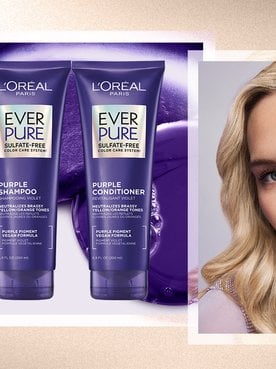
Not all clarifying shampoos are created equally: Some are relatively gentle and suitable even for color-treated hair, while others provide a more intensive clean, making them best suited for oily hair. When selecting a formula, it’s best to make your choice based on your hair type and condition. Below, discover two L’Oréal Paris clarifying shampoos we love.
If you’re in need of a thorough—but still gentle—deep clean, give the L’Oréal Paris EverPure Sulfate-Free Clarifying Shampoo a try. Formulated with vitamin C and glycine, this sulfate-free formula lifts away heavy product buildup and oil to leave the hair feeling clean and refreshed. It’s also a great clarifying shampoo for hard water residue and helps remove stubborn mineral salts that can leave your hair feeling rough or looking dull. The mild formula is non-stripping and suitable for all hair types, and can even be used to refresh color-treated hair. Use it once weekly or as needed to refresh your scalp and strands, then lock in hydration with the coordinating L’Oréal Paris EverPure Sulfate-Free Restoring Conditioner.


If your hair tends to be oily at the roots and drier at the ends, you’ll likely benefit from a clarifying shampoo for greasy hair. Our pick: The L’Oréal Paris Elvive Hyaluron + Pure Purifying Shampoo. This detoxifying shampoo is ideal for that purpose. The skincare-inspired formula contains hyaluronic acid and salicylic acid and helps remove up to 100% of residue to leave your scalp and strands feeling cleansed and refreshed. The hydrating formula won’t strip your hair, and it’s gentle enough for use on all hair types. Pair it with the L’Oréal Paris Elvive Hyaluron + Pure 72H Rehydrating Conditioner for strands that feel soft and balanced.
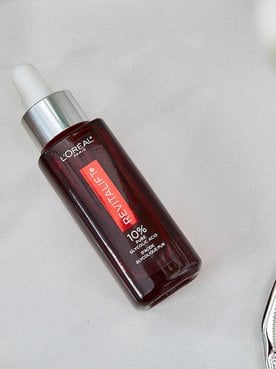
Editor’s tip: For an extra-deep clean, consider applying the L’Oréal Paris Elvive Hyaluron + Pure Oil Erasing Serum for Oily Hair to your dry scalp and waiting about 15 minutes before lathering up with your clarifying shampoo for oily hair. The exfoliating serum dissolves oils and helps remove residue before you even hop in the shower.


Now that you know what clarifying shampoo to use, keep reading to learn how to get the best results from your chosen product.
It might seem unnecessary to remind you of this step, but every good shampooing session begins with wet, saturated hair. If your hair isn’t wet enough, your shampoo might not lather properly, which could interfere with how well it cleans. So before reaching for your chosen clarifying shampoo, get your hair nice and soaked with (lukewarm) water.
Next, dispense a quarter-sized amount of your clarifying shampoo into your palms and massage it into your scalp. Create a thick, dense lather and work the product into your roots to help break up any product buildup or debris that’s weighing down your strands. You’ll want to focus the bulk of the shampooing on your scalp, as this is where oil and buildup tend to accumulate most. Once you’re done scrubbing your scalp, squeeze the lather through your lengths and ends and rinse your hair thoroughly.
Regardless of your hair type or how nourished you think your hair is, it’s always a good idea to use conditioner after shampooing your hair. While shampoo removes excess oil and other debris, conditioner helps replenish moisture for soft, healthy-feeling strands. In most cases, we recommend picking a conditioner that coordinates with the shampoo you chose. However, if your ends need a little extra moisture, consider reaching for a deep conditioner, like the L’Oréal Paris Elvive Total Repair 5 Damage-Erasing Mask. Apply it to your mid-lengths and ends, let it sit for about five minutes, then rinse thoroughly for smooth, soft hair.

Next Up: How To Choose the Right Shampoo for Oily Hair
Photo courtesy of L’Oréal Paris

This site is intended for US consumers. Cookies and related technology are used for advertising. To learn more, or opt-out, visit AdChoices and our privacy policy.
Your Privacy Choices
 Notice at Collection