How To Hydrate Dry Curly Hair
Say goodbye to dry, limp curls.




Overview
Curly hair is naturally more prone to dryness because its spiral shape makes it harder for scalp oils to travel down the hair shaft. When curls lack moisture, they can appear dull, frizzy, and less defined, with an increased risk of breakage. The right haircare routine—focused on gentle cleansing, deep hydration, and moisture-sealing products—can help hydrate curly hair and support smoother, more defined curls that look and feel their best.
You likely already know that hydration is essential for hair to look and feel its best—but if you have curly hair, maintaining that moisture can be more challenging. Because of its spiral shape, curly hair makes it harder for your scalp’s natural oils to travel down the strands, leaving lengths and ends more prone to dryness. Hydrated curls look soft and bouncy; a lack of hydration, meanwhile, can make your hair dull, brittle, or prone to frizz.
The good news is that dryness isn’t something you have to accept as part of having curly hair. With the right curly hair routine, it’s possible to help restore hydration and improve the overall look and feel of your curls. Ahead, we’ll break down why curly hair tends to need more moisture than other hair types and explain how to hydrate dry, curly hair for lasting definition, shine, and bounce.
Curly hair is more prone to dryness because its spiral shape makes it harder for natural scalp oils to travel evenly down the hair shaft.I Combined with a more lifted cuticle structure and external stressors, this uneven moisture distribution can leave curls feeling dry, frizzy, and fragile.
One of the primary reasons curly hair gets dry comes down to its shape. Unlike straight strands, which allow sebum (your scalp’s natural oil) to glide easily from root to tip, curls create bends and twists that interrupt this process. As a result, moisture tends to concentrate at the roots while the mid-lengths and ends are left more vulnerable to dryness.
The structure of the hair cuticle also plays a role. Curly hair often has a thinner cuticle layer, which makes it more vulnerable to lifting.I When the cuticle lifts, hydration can escape, leaving the hair dry, rough, and brittle.
Additionally, the same factors that can make other hair types dry—heat styling, chemical treatments like coloring or bleaching, and environmental stressors such as sun exposure—can further leach moisture from the hair, compounding dryness and making curls more prone to frizz and breakage.II
The terms hydration and moisture describe two distinct but complementary aspects of hair health. Hydration is the amount of water inside the hair strand, while moisture refers to the oils on the outside of the hair that help each strand retain water. For curly hair, both are essential to maintain flexibility, definition, and overall manageability.
Hydration is all about increasing the internal water content of the hair. When hair is well-hydrated, it remains flexible, elastic, and better able to maintain its natural curl pattern. Because curly hair tends to lose water more easily, maintaining this internal hydration is key to preventing brittleness, dullness, and loss of definition.
Moisture, on the other hand, refers to the oils and emollients that sit on the outer layer of the hair. These ingredients help soften the hair’s surface, smooth the cuticle, and reduce friction. While they don’t add water to the hair, they play an important role in keeping strands feeling supple and looking polished.
| Terminology | Hydration | Moisture |
| What It Is | Internal water content of the hair shaft | Oils and emollients that help hair retain water |
| What It Does | Supports hair’s elasticity and flexibility | Softens and smooths the hair’s surface |
| Benefits | Helps maintain curl pattern and bounce | Helps reduce frizz and improve manageability |
Curly hair needs both hydration and moisture because they work together. Without hydration, hair lacks the internal water it needs to stay flexible. Without moisture, that water escapes more quickly. Together, they help curls stay soft, defined, and more resilient against dryness.
The best ingredients for hydrating dry, curly hair help increase water content within the strand while supporting moisture retention on the surface. From humectants like hyaluronic acid and glycerin to ceramides and nourishing oils, these ingredients work together to support hydrated curls that feel soft, flexible, and defined.
For those looking to streamline their routine, systems formulated with hydrating ingredients—like the L’Oreal Paris Elvive Hyaluron Plump system—combine water-attracting humectants and lightweight conditioning agents to help replenish moisture and support softer, more hydrated curls over time. The paraben-free lineup includes a gentle shampoo, powerful lamellar rinse, a lightweight conditioner, and a daily leave-in treatment to help hydrate, plump, and add bounce to dry, dehydrated hair. When used together, the system helps replenish hydration for up to 72 hours for smooth, healthy-looking hair.




A consistent routine is key to maintaining hydrated curls. By layering hydration and moisture at each step—from cleansing to styling—you can help support softer, smoother, and more defined curls over time.
Start by washing your hair with a gentle, hydrating shampoo, such as the L’Oreal Paris Elvive Hyaluron + Plump Hydrating Shampoo, to remove buildup without stripping your hair’s natural oils. Focus on the scalp, allowing the lather to cleanse the lengths as it rinses through.
Apply a rich, hydrating conditioner, like the L’Oreal Paris Elvive Hyaluron + Plump Hydrating Conditioner, from mid-lengths to ends. Use your fingers or a wide-tooth comb to detangle while distributing the product evenly, helping improve softness and manageability.

Smooth (or mist) on a leave-in conditioner for curls (such as the L’Oreal Paris Elvive Hyaluron + Plump Moisture Leave-In Serum) while your hair is still damp. This helps boost water content within the hair and provides a foundation for longer-lasting hydration.

If your hair is especially dry, layer a cream or oil over your leave-in to help lock in hydration. This final layer of product can help smooth the cuticle and reduce moisture loss, supporting softer, more defined curls.
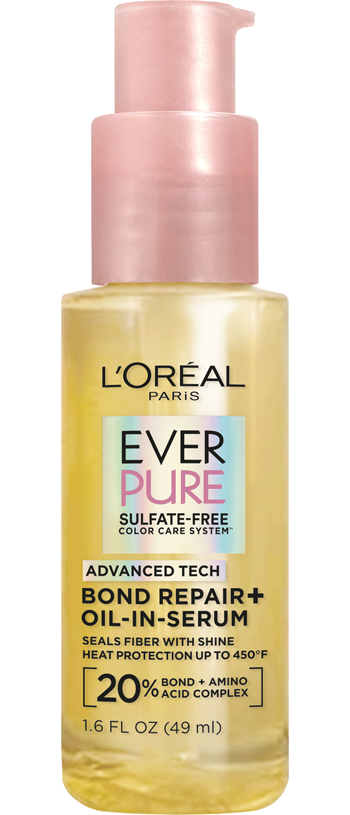
After applying your products, allow your hair to air-dry or use a diffuser on a low heat setting. Avoid excessive heat, which can contribute to dryness and disrupt your curl pattern. (And if you must use heat, be sure to prep your strands well with a high-quality heat protectant, like the L’Oréal Paris EverPure Bond Repair+ Oil-in-Serum, which shields against temperatures up to 450o F).
On non-wash days, lightly mist curls with water or use a hydrating spray to revive them. Follow with a small amount of leave-in or oil if needed to boost hydration, restore softness, and fight frizz.
If you have curly hair, you don’t need to—and, in most cases, shouldn’t—wash your hair every day. Depending on your unique curl pattern and lifestyle, once to twice a week is usually enough. However, that doesn’t mean you should neglect your hair on non-wash days. Keeping curls hydrated between wash days helps maintain softness, definition, and manageability. Here are a few simple tips to incorporate into your curly hair moisture routine:
Not all curls have the same hydration needs. Factors like curl pattern, density, and strand thickness can influence how easily hair retains moisture, so tailoring your approach can help improve softness, definition, and overall manageability without over- or under-hydrating.
Wavy hair tends to become weighed down easily, so lightweight hydration is key. Opt for water-based formulas and avoid heavy layering to maintain bounce and natural movement while still supporting softness. If you notice buildup—which can occur with frequent use of styling aids—incorporate a clarifying shampoo into your routine once every week or two, as needed.
Curly hair benefits from a balanced approach to hydration and moisture retention. Medium-weight formulas can help maintain definition and reduce frizz while supporting elasticity and a more uniform curl pattern. Deep conditioning curly hair can also be beneficial for maintaining hydration—we recommend using a hydrating mask once per week, or as needed to keep your ringlets and coils soft and bouncy.
Coily hair typically requires more intensive hydration due to its tighter curl pattern. Richer creams and oils can help improve moisture retention and make your natural texture look softer and springier. If your hair gets frizzy, curly hair treatments like leave-ins can be a helpful addition to your routine—just be sure to use a clarifying shampoo once a month or so to combat buildup.
Fine curls can lose volume if overloaded with heavy products. Focus on lightweight hydrating ingredients that boost softness and definition without flattening the hair or creating buildup. Additionally, avoid applying conditioners or leave-in treatments to the scalp, as doing so can make your roots appear greasy. Instead, use a hydrating rinse, such as the L’Oreal Paris Elvive Hyaluron + Plump Flash Hydration Wonder Water, to quench your hair without any added weight.

Thick curls often need more substantial hydration to fully saturate the hair. Layering hydrating and moisture-sealing ingredients can help ensure even distribution and longer-lasting softness throughout the strands.
Even with the right products, certain habits can make it harder for curls to stay hydrated. Identifying and adjusting these common missteps can help prevent unnecessary moisture loss and keep curls looking and feeling their best.
Properly hydrated curls have a soft, smooth texture and a natural bounce that allows them to spring back into shape after being stretched or styled. The curl pattern appears defined and consistent, with strands grouping together in well-formed waves, ringlets, or coils rather than separating or looking uneven.
Hydrated hair also shows elasticity, meaning it can stretch slightly without snapping and return to its original shape. Frizz is minimal, as the cuticle lies flat, and the hair has a subtle, healthy-looking shine that reflects light without appearing greasy or weighed down.
Curly hair is naturally more prone to dryness due to its shape, which makes it harder for natural oils to travel down the strand, along with external factors that can further deplete moisture. Because of this, maintaining both hydration (water within the hair) and moisture (oils that seal and smooth the surface) is essential for keeping curls soft, defined, and healthy-looking.
A consistent curly hair routine that layers hydrating and moisture-sealing steps—from cleansing to styling and between wash days—can help support long-lasting results. Using a complete system formulated with hydrating ingredients, like the L’Oréal Paris Elvive Hyaluron Plump full system, can simplify this process by delivering targeted hydration and care at every step. Explore the Hyaluron Plump system to build a routine that helps keep your curls hydrated, smooth, and full of life.
Next Up: Low Porosity vs. High Porosity Hair: How To Tell the Difference
Sources
Photo courtesy of L’Oréal Paris

This site is intended for US consumers. Cookies and related technology are used for advertising. To learn more, or opt-out, visit AdChoices and our privacy policy.
Your Privacy Choices
 Notice at Collection