What Is Foundation Makeup? Types, Uses, and Application Tips
Every great makeup look starts with a smooth, even base.




If there’s one product we’d argue everybody should have in their arsenal, it’s foundation makeup. We’d define foundation as a complexion staple—it serves as the literal base for nearly every look, from no-makeup makeup to full glam. This tinted product helps even out your complexion, camouflaging discolorations and unevenness to create a smooth, flawless-looking canvas for your makeup application.
Those wondering “what is foundation makeup?” will find, however, that there are many different types of this essential product, each with its own set of benefits and uses. Fortunately, you don’t have to figure it all out yourself. Ahead, we’ll explain what foundation is, what it does, and review the different types of foundations available to choose from. Then, we’ll explain how to apply foundation makeup like a pro for an even, flawless-looking complexion.
The word foundation is often used to describe the base of a building—the deep, sturdy layer that supports everything else. Foundation makeup has a similar purpose. It’s usually applied as the second step in your makeup routine (after primer) to help even the skin and hide imperfections, such as redness or dark spots. Foundation typically has more coverage than other base makeup products (such as tinted moisturizers or BB creams), and is really meant to perfect your complexion.
Aside from that primary benefit, the benefits of foundation can vary depending on the formula. Some help mattify unwanted shine; others give the skin a luminous, radiant glow. Some even help hydrate the skin to help support a comfortable, balanced complexion. The specific benefits ultimately depend on the formula you choose and how you apply it.
Foundation makeup is available in four main formats: liquid, powder, and cream. Hybrid products, such as serum foundations and skin tints, are also sometimes considered foundation. Ahead, we’ll explain the benefits and uses of each type.
Liquid foundation boasts a fluid formula with a texture similar to a face lotion. They can be applied with a brush, sponge, or even your fingers, and come in a range of finishes, from matte to radiant. Coverage can vary, too: Some liquid foundations offer sheer, barely-there coverage, while others fall firmly into the full-coverage category. This versatility makes liquid foundation arguably the most popular type of base makeup.
One of our top picks in this category is the L’Oréal Paris Infallible 32 Hour Fresh Wear Foundation. It’s lightweight, non-comedogenic, and comes in 40 shades that offer buildable full-to-medium coverage with a natural, skin-like finish.



Powder foundations are pigmented powders that help even the skin and minimize unwanted shine. Because of their velvety, shine-free finish, these formulas are generally best suited for those with combination or oily skin (or anyone who prefers a matte look).
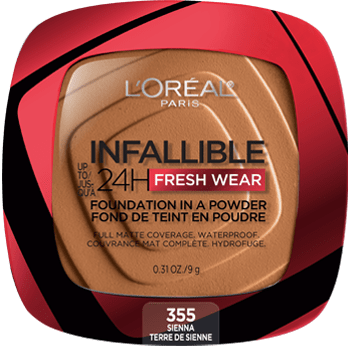
Powder foundations can come loose in a jar or pressed in a compact. Both versions can help even the skin, but pressed powders are more portable and are ideal for on-the-go touch-ups. One of our favorites in this category is the L’Oréal Paris Infallible Up to 24H Fresh Wear Foundation in a Powder, which covers like a liquid and mattifies without looking dry or cakey.


If you have drier skin or prefer a formula that hydrates while providing coverage, a cream or stick foundation may be an excellent option for you.
These buttery formulas are typically thicker than liquid foundations, designed to glide onto the skin smoothly without clinging to dry spots or patches. They typically boast a skin-like, medium-to-full coverage finish and help nourish the skin to support a comfortable, balanced complexion. To apply, you'll generally need a brush or sponge, though some cream and stick formulas can also be applied and blended out with your fingers.
Serum foundations technically fall under the liquid foundation category, but they are notably thinner and more fluid than a standard liquid foundation. These advanced formulas are true skincare-makeup hybrids, designed to help hydrate and nourish your skin while simultaneously providing a sheer, natural-looking coverage. They’re especially well-suited for natural makeup looks, since the coverage they provide tends to be on the lighter side. Usually, it’s best to apply serum foundations with your fingers (the same way you’d apply your favorite skincare serum).
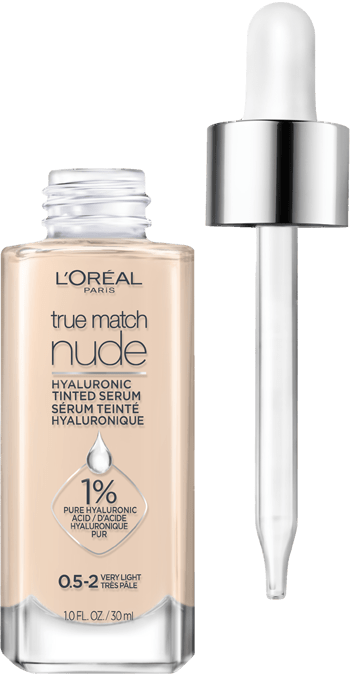
If you’re interested in adding a serum foundation to your routine, try the L’Oréal Paris True Match Hyaluronic Tinted Serum. It’s infused with mineral pigments and 1% hyaluronic acid and helps hydrate, smooth, and brighten the skin—both immediately and over time.

For those who desire minimal coverage with added skincare benefits and a natural, radiant finish, skin tints and tinted moisturizers are an ideal choice, suitable for most skin types. These are typically water-based formulas that provide light, natural-looking coverage and boast skin benefits, such as hydrating the skin. If you’re looking for a skin tint to add to your routine, try the L’Oréal Paris Lumi Le Glow Skin Tint. It’s formulated with blurring pigments and reflective pearls for a glowy, second-skin finish.

Once you determine which type of foundation makeup formula is best for your needs, you’ll need to figure out how much coverage you want. Here’s a breakdown of your options, from the least coverage (light/sheer) to the most (full-coverage).
A foundation with light or sheer coverage is perfect for those who want to subtly even out their skin tone without concealing natural characteristics like freckles. These formulas are designed to let your real skin show through, resulting in a luminous, "your skin but better" look. If that’s what you’re after, opt for a skin tint or tinted serum and apply it with a damp sponge for a fresh, luminous finish.
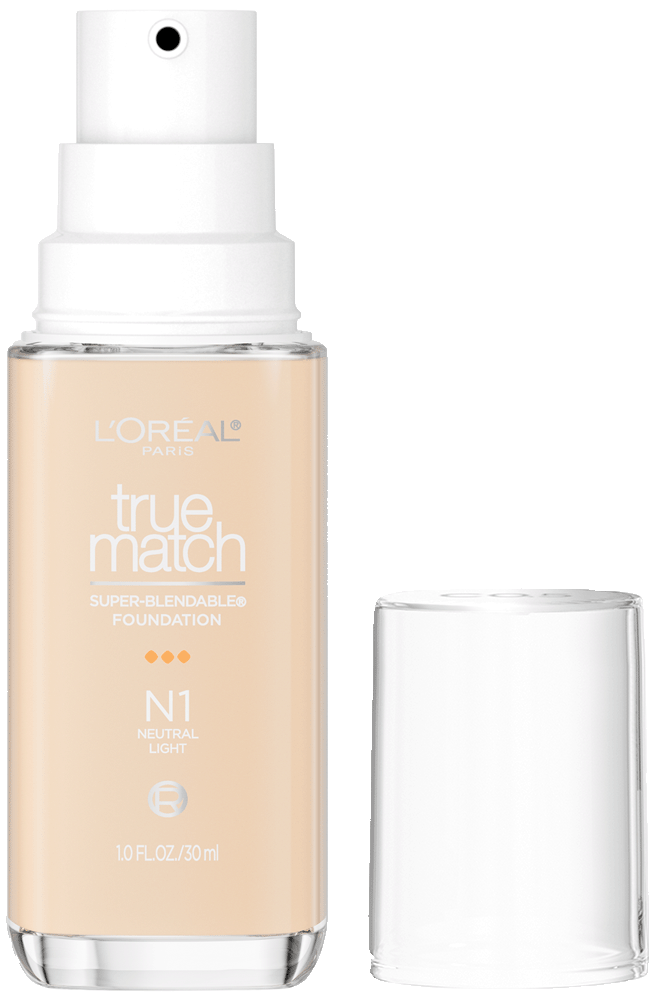
Medium-coverage foundations sit in the middle of the road, offering enough coverage to conceal some imperfections, like redness or minor discoloration, while still maintaining a natural, skin-like appearance. They’re a fantastic choice for those seeking an everyday foundation that makes their skin look smooth and even without feeling heavy. One of our favorites in this category is the L’Oréal Paris True Match Super-Blendable Foundation, which comes in 47 true-to-skin shades that complement a wide range of skin tones and undertones.


Buildable foundations, as the name suggests, are versatile formulas that can be layered to achieve your preferred level of coverage. Unlike foundations with a fixed sheer, medium, or full intensity, buildable formulas allow you to start light and add more product where needed, allowing you to customize your look from natural to more perfected.
These formulas are excellent options for those seeking a single product that can adapt to various makeup looks, from a subtle, everyday finish to a more comprehensive coverage for special occasions.
Full-coverage foundations are ideal if you’re after a flawless-looking base. These pigment-packed formulas are designed to completely cover imperfections to make your skin look even and uniform. Some can even cover tattoos. Due to their concentrated nature, proper skin preparation and a thoughtful application are key to achieving a smooth, seamless finish that enhances your complexion without appearing heavy or mask-like.
A foundation’s finish refers to how it appears on the skin, and can vary from smooth and velvety to glowy and radiant. Choosing the right finish depends largely on your skin type and desired outcome (for example, natural or flawless). Here’s a breakdown of the most common types of foundation finishes.
Matte foundations lack any noticeable shine, providing a smooth, velvety appearance on the skin. These formulas are an excellent option for those with oily skin, as they effectively help to control unwanted shine throughout the day, ensuring a fresh complexion. Their refined, non-reflective texture also makes them a popular choice for creating polished, full glam makeup looks. For a matte finish without a dry or cakey feel, try the L’Oréal Paris Infallible Skin Ink Up to 48H Longwear 2-in-1 Foundation Concealer. It feels lightweight on the skin and provides a soft matte finish that wears for up to 48 hours without creasing, caking, or fading.

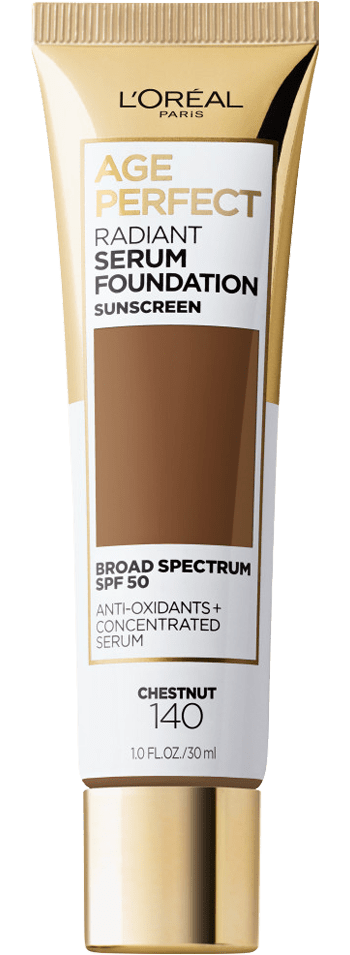
Dewy foundations, by contrast, are glowy and radiant-looking—more so than natural skin. They’re typically liquid and may be infused with reflective pigments to reflect light and amplify luminosity. Because of their fresh, radiant-looking finish, these formulas tend to be ideal for those with dry or dull skin, and they’re particularly well-suited for mature skin (which tends to be both dry and dull). If you’re thinking about adding one into your routine, the L’Oréal Paris Age Perfect Makeup Radiant Serum Foundation with SPF 50 is an excellent choice. It contains a hydrating serum and vitamin B3 and provides fresh, dewy-looking coverage that won’t settle into fine lines.


Natural-finish foundations are designed to look like your skin, offering a harmonious balance that is neither overtly matte nor noticeably dewy. They fall gracefully somewhere in between, making them an ideal choice for users who may be undecided or simply prefer a versatile finish that enhances their complexion without making a bold statement.
There is no single “best” foundation; the right pick for you depends on your skin type, the amount of coverage you need, and your desired finish. Here’s a quick guide to finding the right pick for your skin.
As a general rule, those with oily skin tend to do well with matte liquid foundation makeup formulas or powder foundations, while drier skin benefits from the hydrating feel of skincare-makeup hybrids like serum foundations and tinted moisturizers. With that being said, you should always feel free to choose whichever formula feels best to you and aligns with your preferred application method.
If you’re simply looking to even out your skin tone but don’t need to cover any significant discoloration or imperfections, consider using a sheer or medium-coverage foundation. For a more uniform, airbrushed-looking base, opt for a full-coverage foundation, or customize your look with a buildable formula.
Finally, consider how you want your skin to appear when your makeup is complete. For a smooth, velvety finish, a matte foundation is your best bet. If you want to look radiant and luminous, you’ll typically want to opt for a dewy foundation. And if you simply want your skin to look like skin, reach for a natural-finish foundation.
Foundation might be the most well-known type of base makeup, but it’s far from the only one. Here’s how this makeup bag staple stacks up against other complexion products you may see while shopping.
Foundation makeup is designed to create an even base across the entire face. It provides a general layer of coverage, preparing the skin for the rest of your makeup. Concealer, on the other hand, is a more concentrated product specifically formulated to target and hide localized imperfections, such as dark circles or blemishes. It's typically applied after foundation to areas requiring extra coverage, offering more precise, targeted control.
While foundation is primarily intended to provide coverage and an even canvas, BB and CC creams offer a multi-functional approach. BB (beauty balm) creams typically combine skincare benefits like hydration and SPF with sheer-to-medium coverage to provide a natural, "no-makeup" look. CC (color-correcting) creams, as their name suggests, focus more on color correction to neutralize redness or dullness, often with lighter coverage than BB creams. Both are generally lighter in texture and coverage than traditional foundation, making them suitable for days when you desire less intensity but still want some skin enhancement.
Foundation is a dedicated makeup product for evening skin tone and providing a desired level of coverage. A tinted moisturizer, however, is primarily a skincare product that offers a hint of color. Its main purpose is to hydrate the skin, much like a regular moisturizer, with the added benefit of a sheer wash of tint to subtly even out the complexion. Tinted moisturizers provide the lightest coverage among all these options, perfect for a very natural look or for those who prioritize hydration and a barely-there feel over significant coverage.
One of our favorites in this category is the L’Oréal Paris Lumi Glotion All-in-One Glow Enhancer & Tinted Moisturizer. It’s infused with shea butter and glycerin and can be worn alone for a subtle, glowy tint or mixed into your usual makeup for added hydration (and a hint of glow).

While foundation makeup isn't strictly essential for every look, it serves as a powerful tool for achieving a polished and unified complexion. Many choose to use foundation as their base makeup because it effectively evens out skin tone, camouflages minor imperfections, and creates a smooth canvas for the rest of your products. Ultimately, whether to use foundation is a personal preference, depending on your desired outcome and daily routine.
For those new to the world of cosmetics, liquid foundation makeup or formulas offering buildable coverage are often recommended as the best starting point. These types are generally easy to apply and blend, allowing beginners to gradually build up coverage to their comfort level without the risk of a heavy or unnatural look. Their forgiving nature makes learning how to use foundation a smoother and more enjoyable experience.
Next Up: The Best L’Oréal Foundation for Each Skin Type
Photo courtesy of L’Oréal Paris

This site is intended for US consumers. Cookies and related technology are used for advertising. To learn more, or opt-out, visit AdChoices and our privacy policy.
Your Privacy Choices
 Notice at Collection