Why Is My Face Peeling? How To Manage Dry, Flaky Skin
The first step: Examine your skincare routine.




If every winter you find yourself staring in the mirror, wondering “Why is my face peeling?”, you’re definitely not alone. Flaky patches, tightness, and that telltale rough texture can pop up even if you’re usually on top of your skincare routine, especially once temperatures begin to drop.
The good news is that once you understand what can cause dry, peeling skin on your face, it becomes a lot easier to address. Ahead, we’re breaking down the most common reasons behind facial peeling and the best ways to soothe, support, and rebalance your skin so it looks and feels healthy again.


Peeling skin is a term used to describe what happens when the outermost layer of your skin sheds in visible clumps, flakes, or sheets. It typically occurs when your skin’s natural moisture barrier becomes damaged in some way. When this protective barrier is disrupted, the bonds holding dead skin cells together loosen, causing them to lift, flake, and eventually peel away.
Peeling skin on the face can result from several factors, including exposure to extreme temperatures, overuse of harsh skincare ingredients, and even maintaining a skincare routine that’s not quite right for your needs. Some of the most common causes include:
Of course, the bullets above aren’t the only things that can cause skin peeling—certain skin conditions, like eczema, psoriasis, or seborrheic dermatitis, can play a role, too. If your skin is peeling and you’re unsure why, or a gentle routine isn’t helping to ease the issue, it’s best to check in with a dermatologist for personalized guidance.
If you’re struggling with skin peeling on your face, don’t stress—there are plenty of things you can do to diminish flakiness, alleviate dryness, and help restore your skin’s healthy appearance. Ahead, we’ll explain how to get rid of peeling skin on your face and maintain a hydrated, comfortable complexion.
Because peeling skin can stem from so many different factors, the first step in managing it is to figure out why your skin is peeling in the first place. Understanding the root cause will help you choose the right approach and avoid making the irritation worse. And if you’re not sure what’s triggering it, it’s always worth checking in with a dermatologist for help—that’s what they’re there for.
Hot water might feel relaxing, but it can strip away your skin’s natural oils and weaken its moisture barrier—both of which increase the likelihood of dryness and peeling. When your barrier is compromised, even your usual routine can start to feel irritating.
To help keep your skin balanced, wash your face with lukewarm water and use a gentle, non-drying cleanser that removes impurities without stripping your skin. We love the L’Oréal Paris RevitaLift Radiant Smoothing Cream Cleanser. It helps remove oil, makeup, and other impurities and provides gentle exfoliation to leave the skin feeling soft and smooth.
Exfoliation is the process of removing dead skin cells from the surface of your skin, either manually (with a scrub or washcloth) or with chemical exfoliants. When done properly, regular exfoliation can help minimize flaking, smooth rough patches, and promote a more even-looking complexion.
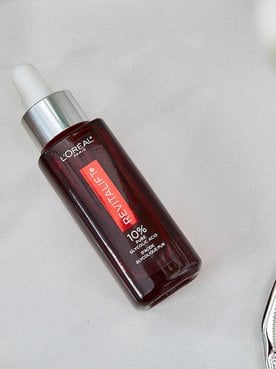
With that being said, a gentle approach is key—exfoliating too aggressively can exacerbate dryness or leave your skin feeling stripped and irritated. Instead of roughly buffing away flaky patches with a scrub, we suggest incorporating a gentle chemical exfoliant into your routine. The L’Oréal Paris RevitaLift 10% Pure Glycolic Acid Serum is an excellent pick—it’s made with 10% glycolic acid and works quickly to help soften, smooth, and refine the skin. The fast-absorbing formula suitable for nightly use, but if you’re new to exfoliation or have particularly sensitive skin, we suggest using it two to three times per week to start. As your skin adjusts, you can gradually work your way up to nightly usage.

One of the best ways to deal with a dry, peeling face is to add more hydrating products to your routine. When your moisture barrier is dehydrated or compromised, your skin has a harder time holding onto water, which can make flaking and peeling more noticeable.
To help replenish your skin without weighing it down, consider adding a hydrating serum to your everyday routine. There are plenty of options to choose from, but for dry, flaky skin that needs extra TLC, we love the L’Oréal Paris Collagen Moisture Filler Moisture Bounce Serum. It’s packed with collagen, glycerin, and squalane and delivers up to 72 hours of hydration for instantly more nourished-feeling skin. The ultra-gentle formula is suitable for all skin types—including sensitive skin—and can be used daily to support a radiant, healthy-looking complexion.

Consistent moisturizing is essential when you’re dealing with peeling or flaky skin. The right formula can help replenish your skin barrier, lock in hydration, and protect your skin from the dryness and environmental stressors that can lead to peeling in the first place.
If your face peeling is accompanied by discomfort or irritation, we suggest opting for a gentle, fragrance-free moisturizer to help keep your skin feeling comfortable. The L’Oréal Paris Collagen Moisture Fillter Anti-Aging Moisturizer, Fragrance-Free is an excellent option—it provides up to 48 hours of hydration with a fast-absorbing, non-greasy texture. Apply it after smoothing on your serum every morning and evening, and enjoy smoother, plumper-looking skin over time.

If you’ve ever had a bad sunburn, you know that peeling skin can be a direct result of UV damage. One of the most effective ways to prevent skin peeling in the first place is to avoid getting burned, which is why daily sunscreen is non-negotiable. Follow the recommendation of the United States Food and Drug Administration (FDA) and wear a broad-spectrum sunscreen with an SPF of at least 15 every day (yes, every day). You can apply your sunscreen as the final step in your skincare routine after moisturizing, but if you’d prefer to keep things simple, consider using an SPF moisturizer during the day. We recommend the L’Oréal Paris RevitaLift Triple Power Moisturizer with SPF 30. It’s formulated with hyaluronic acid, vitamin C, and pro-retinol and works over time to help smooth, firm, and brighten the skin—all while protecting it from damaging UV rays.
Editor’s tip: Applying sunscreen once in the morning isn’t enough to keep your skin protected. Reapply your chosen sunscreen every two hours (more frequently if you’re sweating or swimming), and shield your skin with protective clothing when outdoors.
At night, you can use a richer, heavier moisturizer to help replenish your skin while you sleep. Night creams are designed to restore lost moisture and can help minimize the dryness that may lead to flaking or peeling. Some, like the L’Oréal Paris Age Perfect Skin Care Cell Renewal Midnight Cream, can even help strengthen your skin barrier. Formulated with shea butter, vitamin E, and a patented antioxidant blend, this luxe moisturizer melts into the skin, providing up to 24 hours of hydration for skin that feels nourished and smooth. It also helps repair and protect the skin barrier, which can help to support healthier-looking and healthier-feeling skin in the long term.
Keep in mind that, despite the name, you can also use this rich cream during the daytime for long-lasting moisture and hydration. Just remember to follow up with broad-spectrum sunscreen to help shield your skin from damaging UV rays.

Makeup won’t fix dry, peeling skin on your face, but choosing the right products can help support your skin goals and keep your complexion looking smooth. Skip matte or full-coverage formulas, which can emphasize dry patches, and opt instead for a hydrating, lightweight foundation that won’t cling to flaking or uneven texture. Alternatively, try a skincare-makeup hybrid, like the L’Oréal Paris Lumi Le Glow Skin Tint. It’s made with an 82% hydrating serum base and provides breathable coverage for a healthy-looking, soft-lit glow.


If you’re following the above tips and still find yourself wondering, “Why is my face peeling and dry?”, it may be time to schedule an appointment with your dermatologist. A board-certified dermatologist can check for conditions like eczema, psoriasis, or other underlying concerns that may be contributing to dryness and peeling, and provide guidance tailored to your skin’s unique needs.
Next Up: Why Collagen Cream Deserves a Spot In Your Skincare Routine
Photo courtesy of L’Oréal Paris

This site is intended for US consumers. Cookies and related technology are used for advertising. To learn more, or opt-out, visit AdChoices and our privacy policy.
Your Privacy Choices
 Notice at Collection