How Can I Remove Milia? Simple Routine Tweaks for Smoother Skin
Learn why milia form and what you can do about them.




Upon the initial sight of small white bumps on your skin, it’s common to assume they’re pesky whiteheads, a common concern for those with oilier complexions. But if those tiny white bumps appear on your eyelids or beneath your eyes, you’re likely dealing with milia—not acne. Unlike whiteheads (which form when a pore becomes clogged with oil and dead skin), milia are tiny pockets of keratin trapped beneath the skin’s surface. They can take time to resolve on their own and often require a targeted approach to address and prevent. If you’re wondering “How can I remove milia?”, keep reading. Ahead, we’ll explain why these bumps form, how you can distinguish them from blemishes like whiteheads and pimples, and share tips on how to treat milia for smoother-looking skin.
According to the Cleveland Clinic, milia (or milium when there’s just one) are tiny cysts formed when dead skin cells, specifically keratin, get trapped beneath the skin's surface. While very common in newborns, these small white bumps on the skin also frequently appear in adults. They are benign and typically emerge spontaneously, often appearing on the eyelids, under the eyes, and on the cheeks.
Several factors can contribute to the formation of milia. Understanding the cause can help you learn how to treat milia effectively and prevent new bumps from forming. The primary reasons they appear include:


While only a dermatologist can provide a definitive diagnosis, you can often distinguish milia from other skin concerns at home.
First, take stock of how the bumps look and feel. Milia are small, firm, and light in color—usually whitish or light beige. Unlike acne breakouts, these tiny white bumps on the face aren’t typically accompanied by redness or irritation, and they won’t pop if you try to squeeze them (which—spoiler alert—you shouldn’t attempt).
It can also be helpful to pinpoint where, exactly, the problem is located. Milia most commonly appear on the eyelids, under the eyes, on the upper cheeks, or around the outer edges of your lips. By contrast, acne breakouts can appear anywhere but are most frequent in oilier areas like the forehead, nose, and chin. If you have tiny white bubbles under your eyes, on your eyelids, or around your mouth that don’t hurt or appear alongside redness, chances are good that you’re dealing with milia.
As mentioned, milia form when dead keratin cells get trapped beneath the topmost layer of skin. Gentle exfoliation can help remove that topmost layer of dead skin, allowing the milia to resolve more quickly.
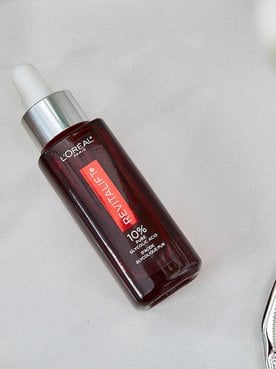
If you’re going to incorporate exfoliation into your routine, it’s important to do so gently to avoid irritation. Steer clear of harsh scrubs, which can irritate the skin, and instead use a mild chemical exfoliant, such as salicylic acid or glycolic acid, to gently resurface the skin. We like the L’Oréal Paris RevitaLift 10% Pure Glycolic Acid Serum for the face, as it contains glycolic acid and aloe vera and provides effective exfoliation without drying out the skin. For milia on the eyelids or around the eyes, an extra-gentle approach is a must, since the skin around here is highly delicate. You can lightly massage the area with a damp washcloth to help loosen dead skin cells, but avoid applying any exfoliants to the area unless directed by your dermatologist to minimize the risk of irritation.


According to the Cleveland Clinic, milia often resolve on their own, though the process can take a few weeks or longer. Having those small white bumps hang around for weeks or even months may seem alarming, but you shouldn’t worry—milia are harmless and completely benign. Still, if you notice that your milia aren’t subsiding after several weeks or months, it may be worth scheduling a visit with a dermatologist for assistance.
If at-home care does not improve their appearance, the most effective way to address stubborn milia is with professional intervention. There are several treatments that a dermatologist may recommend to remove those stubborn white bumps on the skin, including:
Remember that these are professional treatments and should only be treated as such. Never attempt to pop, squeeze, burn, or otherwise forcefully remove milia on your own at home—doing so can result in skin damage, infections, or even permanent scarring.
As mentioned earlier, gentle exfoliation can help minimize the appearance of milia. However, regular exfoliation can also support skin turnover and help prevent milia from developing. How often you should exfoliate depends largely on your skin type and the products you’re using in your routine—mild beta-hydroxy acids, like salicylic acid, can often be used daily. Stronger alpha-hydroxy acids or more potent formulas may need to be used more sparingly, depending on your skin type and needs. If you’re ever unsure how to exfoliate in a way that makes sense for your skin, consult your dermatologist.
Adding a gentle exfoliating serum to your everyday routine can be a great way to support smooth, bump-free skin. When selecting a serum, it’s best to choose one aligned with your skin type and concerns.
If you have oily skin, for example, reach for a salicylic acid serum, such as the L’Oréal Paris RevitaLift 12% Pure Vitamin C + E + Salicylic Acid Serum. Salicylic acid is oil-soluble and can break up debris within pores to help prevent congestion (as well as other concerns, such as blackheads and whiteheads).
For dry or mature skin, glycolic acid is an excellent pick. An everyday serum like the L’Oréal Paris RevitaLift 10% Pure Glycolic Acid Serum can help support surface skin turnover to promote a smoother, more even complexion. Always read the instructions before use, patch-test if you have sensitive skin, and don’t apply anything to your eye area unless explicitly instructed in the product directions or by a dermatologist.

A big part of knowing how to get rid of milia under your eyes or on your eyelids is knowing what skincare products and habits to avoid. If you’re prone to developing these tiny white bumps on your face, steer clear of the following:

Next Up: How To Get Rid of Eye Bags: 14 Tricks That Actually Work
Photo courtesy of L’Oréal Paris

This site is intended for US consumers. Cookies and related technology are used for advertising. To learn more, or opt-out, visit AdChoices and our privacy policy.
Your Privacy Choices
 Notice at Collection