Our Best Dark Spot Correctors for Bright, Even-Looking Skin
From daily serums to potent peels (and more).
DISCOVER OUR NEW ARRIVALS. SHOP NOW


Overview
The best dark spot correctors can help fade visible hyperpigmentation, including sun spots and post-acne marks, with targeted ingredients such as Melasyl™, glycolic acid, niacinamide, or pure Vitamin C. Using a dark spot corrector alongside daily broad-spectrum SPF 30 can help improve the appearance of existing discoloration while protecting against further sun-induced darkening.
Dark spots can be frustrating, especially when you’ve found a skincare routine you love but still notice areas of discoloration you’d rather not see. While dark spots won’t disappear overnight, the right dark spot corrector can help fade their appearance over time, leaving skin looking more even and radiant.
From daily serums to targeted treatments, there are plenty of skin-brightening products worth exploring. Keep reading to discover some of our best dark spot correctors, learn which ingredients can help target discoloration, and find tips to help you get the most from your routine.
Dark spots develop when the skin produces excess melanin, or pigment. This can happen as a result of chronic sun exposure (sun spots), after an injury to the skin (post-inflammatory hyperpigmentation), or even as part of the natural aging process (age spots).I
Dark spot correctors can help improve the appearance of discoloration by targeting different parts of this process, from excess pigment production to the buildup of discolored surface cells. Formulas can vary, but some of the most common ingredients in dark spot correctors include:
Whether you’re looking for the best serum for hyperpigmentation to add to your daily routine or want a targeted treatment to fade stubborn dark spots fast, we’ve got a formula for you. Below, discover our top drugstore dark spot correctors and learn how to add them to your routine.
| L’Oréal Paris Product | Key Ingredients | Primary Benefit | Best For | Results Timeline |
| L’Oréal Paris RevitaLift Triple Power Melasyl Dark Spot Creamy Serum | MelasylTM, Niacinamide, Vitamin C | Visibly reverses up to 5 years of dark spots and hyperpigmentation | All skin types, especially dry or sensitive | Visible reduction in dark spots within one week |
| L’Oréal Paris RevitaLift 12% Vitamin C + E + Salicylic Acid Serum | Vitamin C, Vitamin E, and Salicylic Acid | Brightens, refines, and smooths | All skin types, especially oily or blemish-prone skin | 70% brighter skin in eight weeks |
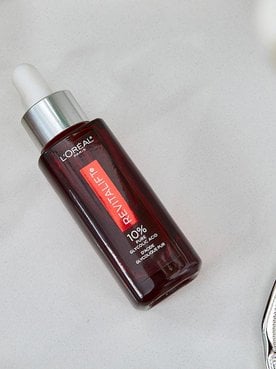
| L’Oréal Paris RevitaLift 10% Pure Glycolic Acid Serum | Glycolic Acid and Aloe Vera | Exfoliates, brightens, and visibly reduces dark spots | Dull, uneven, or mature skin | Visibly reduces dark spots in two weeks |
| L’Oréal Paris Bright Reveal Dark Spot Exfoliant Peel | 25% Multi-Acid Blend with AHA, BHA, and PHA | Visibly reduces all types of dark spots, brightens, and smooths | All skin types and tones | Brightens skin in one use; visibly resurfaces in two weeks |
Years of sun exposure and the natural aging process can make dark spots a particularly pressing concern for those with mature skin. This dark spot corrector serum helps target those stubborn spots, providing a visible improvement in as little as one week of use. It boasts a rich yet non-greasy texture that delivers up to 100 hours of hydration and can be used day or night for clearer, more youthful-looking skin.


If you’re looking for one serum you can use to help target dullness, dark spots, fine lines, and visible pores, this formula is a must-try. It instantly brightens the look of dull skin, while continued use minimizes the appearance of dark spots, fine lines, and dark spots for a visibly more even complexion.

Regular exfoliation is one of the best ways to keep your skin bright, even, and clear. For a gentle approach, we love this daily-use formula, which combines 10% glycolic acid with soothing aloe vera to help keep the skin feeling hydrated and comfortable. You’ll notice your dark spots appear less visible within two weeks of use, while continued use helps smooth the skin for a more youthful appearance. If you’re new to exfoliation or have sensitive skin, we recommend using it two nights a week to start. As your skin acclimates, you can gradually work up to nightly usage.

Chemical peels are strong exfoliating treatments designed to refine, resurface, and brighten your skin. Though the thought of doing a dark spot peel at home may seem intimidating if you’ve never done it before, it’s simple with the right formula. This one features a targeted multi-acid blend designed to brighten and resurface your skin in as little as 15 minutes. With consistent use, you’ll notice a dramatic improvement in skin’s texture and tone—including a noticeable reduction in dark spots—after just three weeks. For a full rundown of at-home peels and how they work, check out How To Use an Exfoliating Mask or Peel.

If you’re wondering how a dark spot corrector fits into your routine, keep reading. Ahead, we’re sharing a simple morning and evening routine to help keep your skin bright, clear, and even.
Even the best-rated dark spot correctors can only do so much—to maintain your results, you also need to protect your skin from further damage (which means staying out of the sun when you can, and wearing plenty of sunscreen when you can’t). Here’s a look at what an effective, protective morning routine might look like:

At night, your focus should be on correction rather than protection. Here’s a look at a simple yet effective evening routine for dark spots:
Next Up: How To Get Glass Skin: Tips and Tricks You Need To Try
Photo courtesy of L’Oréal Paris
Sources

This site is intended for US consumers. Cookies and related technology are used for advertising. To learn more, or opt-out, visit AdChoices and our privacy policy.
Your Privacy Choices
 Notice at Collection