Peptide Serum: Here’s How To Hack Your Skin’s Age
If you’re not using peptides, consider this your sign to start.




Content Summary
Peptides are short chains of amino acids that serve as the building blocks of proteins like collagen and elastin. When applied topically—most commonly in peptide serums—they help support the skin’s natural functions and address visible signs of aging. Skincare formulas use several types of peptides, including signal, carrier, enzyme inhibitor, and neurotransmitter peptides. The benefits of a peptide serum depend on its formulation, including the types of peptides it contains and their concentration.
If you’re looking to take your anti-aging routine to the next level, a peptide serum deserves a spot on your radar. Peptides are short chains of amino acids that act as the building blocks of proteins like collagen and elastin, which help keep your skin firm, bouncy, and resilient. When applied topically, peptides for skin can help target the visible signs of aging to promote a more youthful, healthier-looking complexion.
Whether you’re new to peptides or looking for the right formula for your specific skin concerns, keep reading. Ahead, we’ll break down what peptides do for skin, explore the different types you’ll see in skincare, and highlight our best peptide serums to help you achieve your skin goals.
A peptide serum is a facial serum formulated with peptides, such as collagen peptides or MatrixylTM. According to the Cleveland Clinic, peptides are short chains of amino acids that form the building blocks of proteins, including collagen and elastin, which together are responsible for giving skin its structure and elasticity.I Skincare products containing peptides deliver amino acids to the skin to help support these essential structural proteins, which, in turn, can help support firmer, smoother skin. Like all serums, peptide serums tend to be lightweight and fast-absorbing, making them easy to layer with other products, such as moisturizers and sunscreens.
When used topically, peptides can support a more youthful-looking complexion by reinforcing the skin’s natural structure and function. Anti-aging peptides help promote the proteins responsible for firmness, which can improve the look of skin that feels less taut over time. They also support elasticity, allowing skin to appear more supple and resilient.
Peptides in skincare can also help soften the appearance of fine lines and wrinkles by supporting the skin’s structural framework. Some may even help reinforce the skin barrier, helping the skin retain moisture more effectively. This added hydration can leave skin looking smoother, plumper, and more refreshed overall.
Not all peptides work the same way. Some help support the skin’s essential proteins; others affect the skin’s daily processes, such as cellular turnover. Here’s a quick breakdown of the different types of peptides used in skincare and how they work.
Signal peptides “signal” the skin to support the production of key structural proteins, including collagen and elastin.II When used topically, they can help promote firmer, more resilient skin, which is why they’re commonly used in anti-aging serums and peptide moisturizers.
Carrier peptides carry compounds—most often trace minerals, such as copper—to the skin. These elements support various natural processes that keep skin looking healthy and balanced, making carrier peptides a common addition to targeted skincare formulations.III
Neurotransmitter peptides interact with the signals between nerves and facial muscles. When used topically, they may help to weaken muscle contractions, which can reduce the repetitive facial movements that contribute to expression lines over time. By helping relax the look of these micro-movements in the skin, they soften the appearance of dynamic wrinkles, such as crow’s feet and forehead lines. IV
Enzyme inhibitor peptides help limit the breakdown of important structural components in the skin, such as collagen. By supporting the preservation of these elements, they play a role in maintaining a firmer, more resilient appearance over time.V
If you’ve spent any time researching peptides, you’ve likely come across the idea of “peptide stacking”—in other words, using several different types of peptides at once to target different skin concerns. While layering multiple peptides for anti-aging benefits might sound like a smart idea, it’s not always necessary. Many skincare formulas already feature a blend of peptides to address several signs of aging in a single, uncomplicated step.
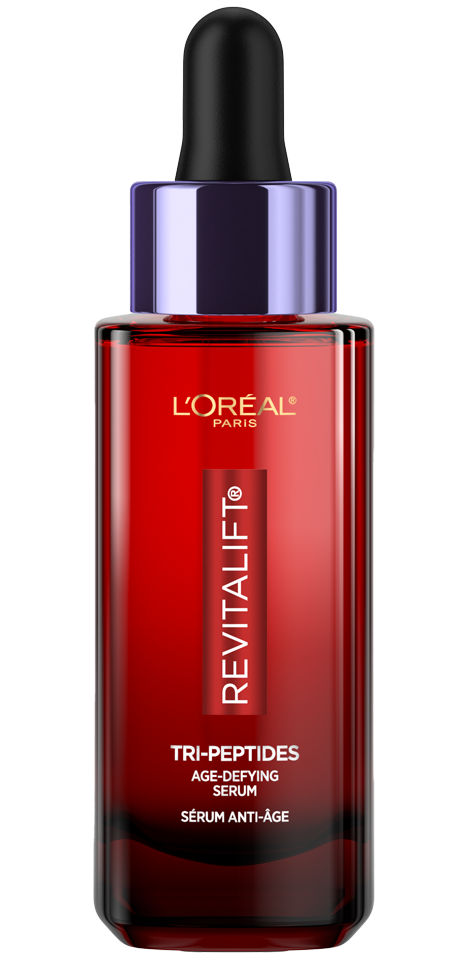
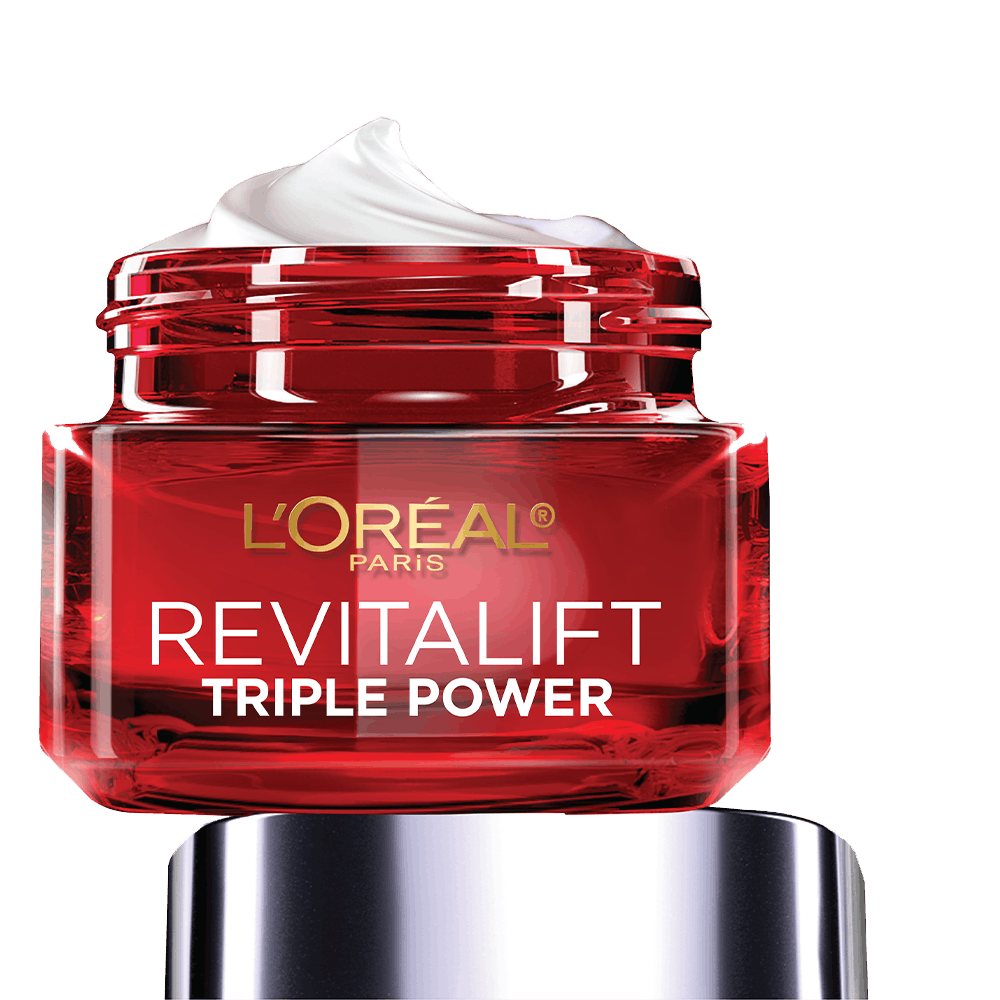
One example of a product that contains several peptides is the L’Oréal Paris RevitaLift Triple Power Tri-Peptide Serum. It’s formulated with a tri-peptide complex (featuring MatrixylTM, Carnosine, and Argireline™-Amplified Peptide) and works quickly to help firm the skin, smooth fine lines, and boost radiance. It boasts a lightweight, non-greasy formula that absorbs easily and can be used both morning and night as part of your regular anti-aging skincare routine.



A high-quality peptide serum can fit easily into a simple, consistent skincare routine. The key is to layer your products in the right order and use them daily. Here’s a quick breakdown of an effective anti-aging routine featuring our tri-peptide serum.
Start by washing your face with a mild cleanser to remove oil, sweat, and any other impurities that may be sitting on the surface of your skin. For a gentle yet effective cleanse, we love the L’Oréal Paris RevitaLift Radiant Smoothing Cream Cleanser. It’s made with vitamin C and provides gentle exfoliation to refine the skin without over-drying.
Next, pat your skin dry with a clean towel and dispense three to four drops of the L’Oréal Paris RevitaLift Triple Power Tri-Peptide Serum into your palms. Press the lightweight formula onto your face and neck, then massage it in until it’s fully absorbed.
Next, smooth on the L’Oréal Paris RevitaLift Triple Power Moisturizer, an anti-aging moisturizer to help lock in hydration and further address your skin concerns. Be sure to apply it to your neck and décolletage as well—these areas are uniquely susceptible to age-related concerns, such as fine lines and dark spots.
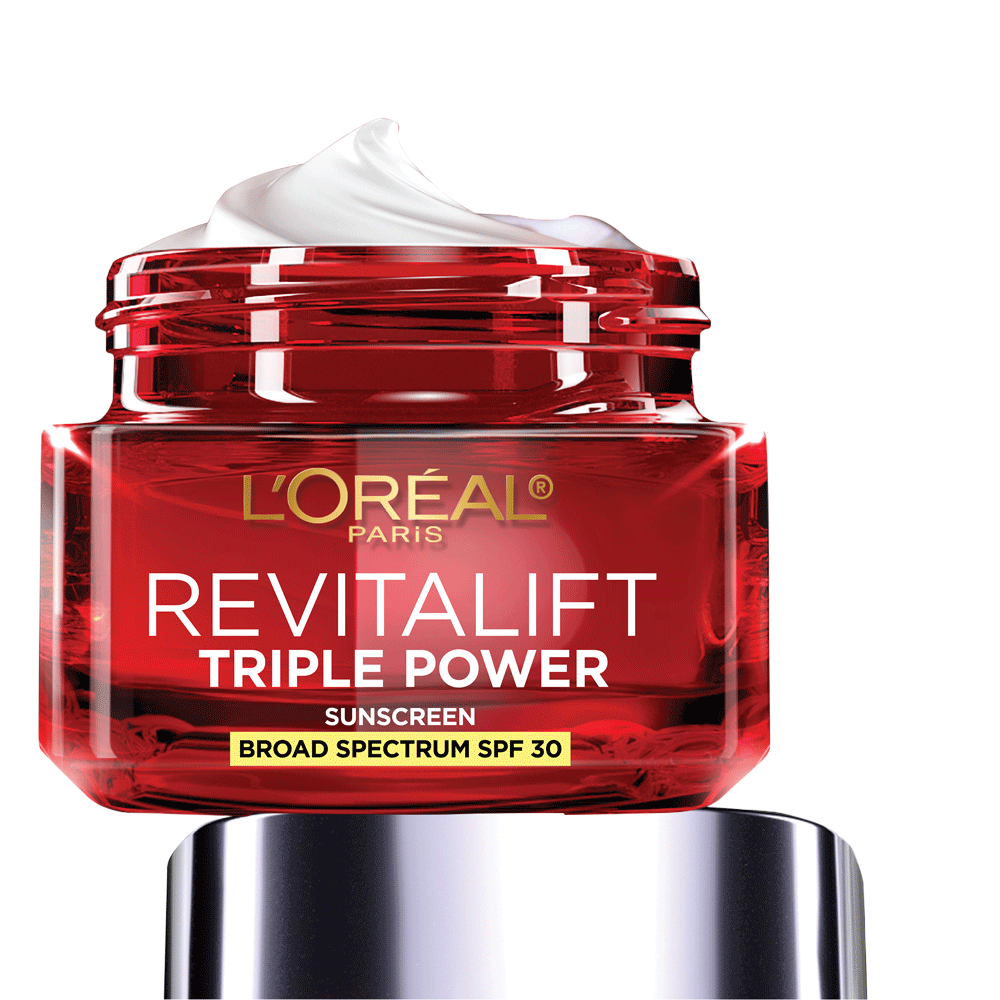
Complete your morning routine by applying a broad-spectrum sunscreen with an SPF of at least 15 to help shield your skin from the sun’s damaging UV rays. If you’d prefer a streamlined routine, you can combine your moisturizer and sunscreen into one step with the L’Oréal Paris RevitaLift Triple Power Moisturizer with SPF 30. It’s lightweight, fast-absorbing, and layers beautifully under makeup, making it an excellent addition to any morning skincare routine.

At night, it’s important to cleanse your face to remove sunscreen, makeup, and any other impurities that may have accumulated throughout the day. For this step, we recommend the aforementioned L’Oréal Paris RevitaLift Radiant Smoothing Cream Cleanser—it helps remove makeup while providing a thorough yet gentle cleanse for fresh-feeling skin.
After cleansing, apply a peptide serum, the L’Oréal Paris RevitaLift Triple Power Tri-Peptide Serum, to freshly cleansed skin, following the same process as you did in the morning. If you’re layering serums, do so in order of consistency, starting with the lightest, most fluid formulas.
Moisturizing before bed is essential, regardless of your skin type (all skin needs hydration to look and feel its best). Once it’s dark out, you can skip the sunscreen—instead, give your skin TLC with the classic L’Oréal Paris RevitaLift Triple Power Moisturizer (or the fragrance-free version). Both feature a powerful blend of pro-retinol, vitamin C, and hyaluronic acid and work over time to help smooth, firm, and brighten the skin.


Peptides are known for their versatility, which makes them easy to pair with a wide range of skincare ingredients. Rather than competing, many of these ingredients complement peptides by supporting hydration, barrier function, and overall skin appearance.
Like most skincare ingredients, peptides require consistent use over time to deliver visible results. While you may notice an immediate boost in hydration, changes related to firmness and elasticity tend to take longer to become evident.
Generally speaking, you can expect to see improvements in the look of fine lines and skin texture within a few weeks. Because peptides work by supporting the skin over time, results build gradually, making consistency key. Sticking with a peptide serum as part of your daily routine can help you see more meaningful, longer-term improvements.
Choosing the best peptide serum comes down to finding a formula that works for your skin and fits into your routine. For the best results, we suggest looking for formulas that include multiple types of peptides for skin, as combining different ingredients can help target a range of visible concerns at once. It can also be helpful to choose a serum with hydrating ingredients like hyaluronic acid, glycerin, or ceramides to support overall skin comfort and smoothness.
It’s also important to consider your personal preferences and needs. For example, if you have sensitive skin, look for a fragrance-free serum to help prevent unnecessary irritation. If you have blemish-prone skin, a non-comedogenic formula can help keep breakouts at bay.
Lastly, do your due diligence. When possible, opt for formulas with clinical backing (such as clinical testing or dermatologist oversight) to ensure the product you’re choosing is both safe and effective.
Next Up: What Is Melasyl? The New Approach To Even-Looking Skin
Photo courtesy of L’Oréal Paris
Sources
I. “Peptides for Skin care: Are they worth it? (2024). In Cleveland Clinic. https://health.clevelandclinic.org/peptides-for-skin
II. Dolan, C., Burke, C. S., Byrne, A., & Keyes, T. E. (2017). Cellular uptake and sensing capability of Transition metal peptide conjugates (pp. 55–89). Elsevier. https://www.sciencedirect.com/topics/agricultural-and-biological-sciences/signal-peptide
III. Wang, L., Wu, Z., Wang, X., Wang, X., Mao, J., Yan, Y., Zhang, L., & Zhang, Z. (2025). Overview of Peptides and their potential roles in skin health and beauty. Journal of Peptide Science, 31(2). https://doi.org/10.1002/psc.3668
IV. Gonzalez‐Lozano, M. A., & Li, K. W. (2020). Peptide neurotransmitters and hormones. Encyclopedia of Life Sciences, 1–9. https://doi.org/10.1002/9780470015902.a0000063.pub3
V. Ledwoń, P., Papini, A. M., Rovero, P., & Latajka, R. (2021). Peptides and Peptidomimetics as Inhibitors of Enzymes Involved in Fibrillar Collagen Degradation. Materials (Basel, Switzerland), 14(12), 3217. https://doi.org/10.3390/ma14123217

This site is intended for US consumers. Cookies and related technology are used for advertising. To learn more, or opt-out, visit AdChoices and our privacy policy.
Your Privacy Choices
 Notice at Collection