Does GLP-1 Weight Loss Age Your Face or Accelerate the Signs of Aging?
Plus, what you can do about weight loss-related laxity.
DISCOVER OUR NEW ARRIVALS. SHOP NOW


Overview
GLP-1 weight loss does not speed up biological skin aging. Instead, the rapid loss of facial fat can reduce the cushion that keeps skin looking taut, making existing fine lines, hollows, and laxity more noticeable. Targeted skincare can help restore surface hydration and support a firmer, plumper-looking appearance.
Losing weight can change more than the number on the scale. If you’re taking a GLP-1 medication and have noticed your skin looking a little different, you may be wondering: Is the medication making my skin age faster? Not exactly. GLP-1 weight loss doesn’t accelerate biological skin aging, but the rapid loss of facial fat can make existing fine lines, wrinkles, and even sagging more noticeable.
So, what’s actually happening to your skin, and what can you do about it? Ahead, we’ll break down the difference between facial volume loss and biological skin aging, plus the skincare ingredients that can help your skin look more hydrated, plump, and firm.


| Skin Change | Biological Aging | Rapid GLP-1 Weight Loss |
| Primary Change | Gradual decline of collagen, elastin, and skin hydration | Loss of facial volume |
| Main Drivers | UV exposure, genetics, and intrinsic aging | Rapid reduction in body and facial fat |
| Effect on Facial Appearance | Fine lines, wrinkles, uneven pigmentation, and reduced firmness | More noticeable hollows, deeper-looking lines, and facial laxity |
| What Skincare Can Do | Boost hydration, brighten, and smooth the skin; protect against future damage | Improve hydration, firm the skin, and visibly plump fine lines |
GLP-1 medications don’t accelerate biological skin aging at the cellular level. Biological aging is a gradual process influenced by factors such as chronological age, UV exposure, oxidative stress, and declining collagen production. Over time, these changes can contribute to wrinkles, uneven pigmentation, and loss of firmness and elasticity.
Rapid weight loss is different. Losing a significant amount of body fat can also reduce subcutaneous fat in the face, which provides some of the underlying volume and support for the skin. With less facial volume, skin and soft tissue may sit differently over the underlying facial structure, helping explain why weight loss causes facial sagging and why existing lines and hollows may look more pronounced.I
In other words, GLP-1 weight loss doesn’t necessarily make your skin age faster. It can change the structure beneath the skin in a way that makes existing signs of aging more visible. While skincare can’t replace lost facial volume, topical skincare for weight loss-related facial changescan help improve the appearance of plumpness, smoothness, and firmness.
Editor’s note: For a closer look at the clinical data on GLP-1-related skin changes, read our plain-language research explainer, What Did the RevitaLift Triple Power Study Find for GLP-1 Users?
Rapid weight loss can change the shape of your face because you lose some of the fat that provides volume and support beneath the skin. When facial fat decreases quickly, areas such as the cheeks, temples, and jawline may look more hollow or less defined, while existing folds and lines can become more noticeable.
Facial fat isn’t distributed evenly. It sits in different compartments beneath the skin, including areas around the cheeks, temples, and eyes. These fat pads help create the fullness and contours associated with a youthful-looking face. When they shrink with weight loss, the skin has less underlying volume to support it, which can contribute to a hollowed appearance, more visible nasolabial folds, or increased definition around the jawline and jowls.
Collagen and elastin help give skin its structure and elasticity, but they don’t adjust immediately when facial volume changes. Because these proteins remodel gradually, the skin may temporarily look looser or less firm after rapid weight loss. As your weight stabilizes, your skin can continue adapting to the changes in volume beneath it.
There’s currently no clear clinical evidence that GLP-1 medications directly damage dermal collagen or accelerate biological skin aging. However, emerging research suggests GLP-1 receptor signaling may influence skin cells and collagen-related pathways, so scientists are still investigating how these medications may affect skin biology.II Rapid weight loss itself can also change facial volume and skin quality, making signs of aging more noticeable.
For now, it’s more accurate to think of GLP-1-related skin changes as having multiple possible contributors, rather than attributing them entirely to collagen loss or facial fat loss. Reduced facial volume is a well-documented factor, while potential effects on collagen production and degradation remain an area of ongoing research.
Topical skincare can’t replace facial fat lost during weight loss, but it can help improve the appearance of skin that looks less plump or firm. Ingredients such as multi-weight hyaluronic acid, pro-retinol, and vitamin C can replenish hydration, smooth the look of fine lines, and support a firmer, more supple-looking complexion.
The L'Oréal Paris RevitaLift Triple Power Anti-Aging Moisturizer combines these ingredients to provide 24-hour hydration while helping improve the appearance of fine lines and firmness.
In a consumer study of 102 GLP-1 users, 74% agreed their skin looked firmer after four weeks, while 80% reported increased confidence in their skin’s appearance. Additionally, 91% reported that their skin felt smoother and more refined.1 These findings suggest that targeted topical skincare may help address some of the visible changes people notice after rapid weight loss, even though it cannot restore lost facial volume.
For more on what topical skincare can and can’t do for facial fullness after weight loss, read Can a Moisturizer Restore Facial Fullness After GLP-1 Weight Loss?

If your skin looks less firm or plump during weight loss, a consistent skincare routine can help improve its appearance. Focus on three basics: hydrate skin with hyaluronic acid, use firming and smoothing ingredients like peptides and retinol, and protect your skin from UV damage with SPF 30 every morning.
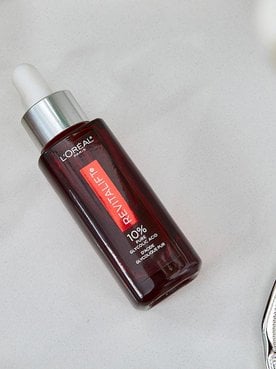
After cleansing your face—a can’t-skip step in any routine—replenish moisture with the L'Oréal Paris RevitaLift 1.5% Pure Hyaluronic Acid Serum. Apply two to three drops to clean, damp skin, then follow with moisturizer. Hyaluronic acid helps the skin attract and retain moisture, leaving it visibly smoother, softer, and plumper over time. This dermatologist-validated serum also helps minimize the look of fine lines with continued use.
When shopping for skincare, look for ingredients that have been shown to help improve the appearance of skin firmness. Peptides are a great option because they help support the skin’s natural structure and can leave it looking firmer and more resilient.III After applying your hyaluronic acid serum, smooth on the L’Oréal Paris RevitaLift Tri-Peptides Age-Defying Serum (pictured below). It contains a powerful triple-peptide complex and works quickly to hydrate, smooth, firm, and plump the skin.
At night, you can also use retinol to help smooth and resurface the skin while improving the look of fine lines and firmness. Try the L’Oréal Paris RevitaLift Night Serum, 0.3% Pure Retinol, which contains hyaluronic acid and glycerin to help offset potential dryness. We suggest using it once per week to start and gradually increasing usage as your skin adjusts.

Daily sun protection is essential for helping preserve your skin's existing collagen. UV exposure can break down collagen over time and contribute to visible loss of firmness. Apply the L'Oréal Paris RevitaLift Triple Power Anti-Aging Moisturizer with SPF 30 every morning as the final step in your skincare routine, and reapply every two hours to maintain adequate protection.
Next Up: How To Find the Best Facial Serum for Your Anti-Aging Skin Goals
Photo courtesy of L’Oréal Paris
Sources

This site is intended for US consumers. Cookies and related technology are used for advertising. To learn more, or opt-out, visit AdChoices and our privacy policy.
Your Privacy Choices
 Notice at Collection