How To Tell If You Should Add a Hard Water Hair Treatment To Your Routine
Plus, our favorite treatments for tackling hard water residue fast.




If your hair looks dull or feels greasy, it’s easy to assume your routine is to blame (and sometimes, it is). But sometimes, the issue isn’t your products—it’s the water you’re using. Washing with mineral-heavy water, also known as hard water, can leave buildup on the hair over time, leading to roughness, dullness, and a loss of volume. Installing a water softener can help, but if you’re looking for a quicker fix, a targeted hard water hair treatment can make a noticeable difference.
Ahead, we’ll break down what hard water is and how to tell if it’s affecting your strands. Then, we’ll introduce you to our favorite hair products for hard water to help remove buildup and restore your mane’s healthy look and feel.


The term “hard water” refers to water with a higher-than-average concentration of minerals, primarily calcium and magnesium. Hard water may also contain small amounts of dissolved metals, such as iron. While these compounds aren’t inherently harmful, they can leave behind buildup when you use hard water to wash your hair, skin, or clothing. Over time, that buildup can lead to a range of issues (more on that shortly).
Hard water can affect your hair in a few noticeable ways, with buildup being the most common. While standard shampoos and conditioners do a great job removing oil and dirt, they’re less effective at breaking down mineral deposits. If you’re washing your hair in hard water regularly, those minerals can accumulate on your strands over time, leaving them looking dull, flat, and weighed down. Research published in the International Journal of Trichology also suggests that hard water may weaken the hair, making it more prone to breakage over time.
Color-treated hair isn’t immune, either. Frequent exposure to mineral-rich water can cause your color to fade more quickly than expected. And if you lighten your hair, hard water residue can interfere with the bleaching process, leading to less predictable, sometimes uneven results. The good news? Haircare for hard water can help remove this buildup to restore your hair’s healthy look and feel.
Hard water hair damage can manifest in several ways. Some of the most common signs include:
Your shampoo can also help you determine whether you have hard water. The next time you wash your hair, pay attention to how it lathers. If you notice it’s not sudsing as much as usual, that can be a sign of mineral buildup on the scalp or strands.
If you suspect your hair woes are due to hard water, you’re likely wondering what you can do about it. Fortunately, there are plenty of solutions. Ahead, we’ll explain how to protect your hair against hard water damage and share a look at our favorite hard water hair treatments to add to your routine.
Swapping out your showerhead is a simple home upgrade that can make a noticeable difference in how your hair looks and feels. A filter designed for hard water can help reduce the mineral content in your water, improving its overall quality and minimizing buildup on your hair over time. Prices for showerhead water softeners vary, but you should be able to find a quality filter for around $100. Keep in mind, however, that this isn’t a one-time cost—you’ll need to replace the filter regularly (usually, once every three to six months) to maintain its efficacy.
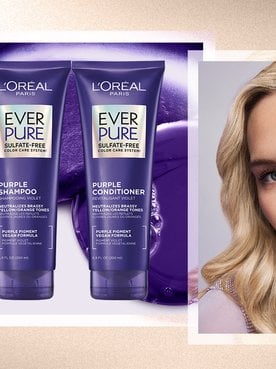
If investing in a water softener isn’t in the budget, that’s okay—a quality shampoo for hard water can help remove mineral buildup and keep your hair looking healthy. We recommend the L’Oréal Paris EverPure Sulfate-Free Clarifying Shampoo. The deep-cleaning formula with vitamin C and glycine helps remove oil, mineral salts, and product buildup without stripping your hair, leaving your mane brighter and healthier-looking with each use. After lathering up, work the L’Oréal Paris EverPure Sulfate-Free Restoring Conditioner throughout your mid-lengths and ends to replenish moisture and softness.

Editor’s tip: Even the best shampoo and conditioner for hard water can be drying if used too frequently. We recommend reaching for your clarifying products no more than once per week to keep your hair feeling balanced and healthy.
Hard water can be, well, hard on your hair. In addition to causing buildup, frequent hard water exposure can leave your strands dry and brittle. To help replenish dry, damaged hair, consider using a reparative mask or deep conditioner once per week. If you need a recommendation, the L’Oréal Paris Elvive Total Repair 5 Damage Erasing Mask is a great pick. It contains a 17% repair concentrate with protein and helps fight five signs of damage (including split ends and roughness) while deeply nourishing the hair.

Turning down the dial in your shower is a simple way to protect your hair from unnecessary damage. Hot water can strip your strands of essential moisture, making it more vulnerable to damage caused by hard water buildup. You don’t have to shower in freezing water—but turning it down to a comfortable lukewarm temperature can help keep your hair feeling its best.
As we mentioned earlier, your shampoo and conditioner for hard water aren’t typically meant for daily use. When you’re not lathering up with clarifying shampoo, consider reaching for a bond-repairing system to help strengthen your hair and guard against future damage. Try the L’Oréal Paris EverPure Sulfate-Free Bond Repair+ Shampoo and coordinating L’Oréal Paris EverPure Sulfate-Free Bond Repair+ Conditioner. Together, this sulfate-free duo gently cleanses, moisturizes, and helps rebuild weak hair bonds to help reinforce brittle strands and protect against future damage. For added TLC, pre-treat your mane with the L’Oréal Paris EverPure Sulfate-Free Bond Repair+ Pre-Shampoo Treatment, which boasts a 22% bond repair and amino acid complex and visibly reverses damage in as little as one use.

Hot tools can be helpful, but they can also take a toll on your strands—especially if you use them every day. If you’re already worried about hard water hair damage, consider taking a break from the hot tools and letting your hair air-dry when you can. If you need to blow dry, curl, or flat iron your hair, be sure to prep your mane with a quality heat protectant to help guard against damage. We recommend the L’Oréal Paris EverPure Sulfate-Free Bond Repair+ Oil-in-Serum, since it helps strengthen the hair, smooths unruly strands, and protects against temperatures up to 450 degrees Fahrenheit.
Soft water is the opposite of hard water—in other words, it’s water without a high concentration of minerals. It isn’t completely devoid of minerals, though, and if your hair is already dull or damaged, those trace amounts of calcium and magnesium can still take a toll on your strands. If your hair looks dull or feels rough (even with a weekly clarifying shampoo), consider adding a glossing treatment to your regular routine. While hair gloss won’t protect against mineral buildup, the right formula can help restore your hair’s softness and shine. We love the L’Oréal Paris Elvive Glycolic + Gloss Shine Boosting Shampoo and coordinating L’Oréal Paris Elvive Glycolic + Gloss Shine Boosting Conditioner. The former gently cleanses and helps laminate the hair cuticle, while the latter provides deep, long-lasting hydration for healthy-feeling hair. We recommend using the duo every time you lather up, then combing the L’Oréal Paris Elvive Glycolic + Gloss High-Shine Leave-In Serum throughout damp strands before styling for added shine and long-lasting smoothness.

Next Up: Low Porosity vs. High Porosity Hair: How To Tell the Difference
Photo courtesy of L’Oréal Paris
This site is intended for US consumers. Cookies and related technology are used for advertising. To learn more, or opt-out, visit AdChoices and our privacy policy.
Your Privacy Choices
 Notice at Collection