Can You Prevent Sagging Skin During Weight Loss?
A balanced routine can help keep your skin looking its best.
DISCOVER OUR NEW ARRIVALS. SHOP NOW


Overview
Losing weight can shrink your skin’s underlying fat pads, which may make your skin look loose or saggy. To help prevent sagging skin during weight loss, combine healthy lifestyle habits with a proactive skincare routine. Pace your weight loss to 1-2 pounds per week (or as recommended by your doctor), ensure adequate protein intake, and apply topical products with retinol, vitamin C, and hyaluronic acid to hydrate and protect your skin.
Losing weight can bring meaningful changes to your body, but it can also change the way your skin looks and feels. As your body loses volume, your skin may not adjust to its new shape right away, which can lead to sagging skin.I While you can’t always prevent sagging skin during weight loss, the habits you build along the way may help support your skin’s firmness, elasticity, and overall appearance.
Staying hydrated, eating a balanced diet, incorporating strength training, and taking a slow-and-steady approach to weight loss can all support your skin as your body changes. A consistent, protective skincare routine can also help maintain plump, healthy-looking skin.
Ahead, we’ll break down what causes loose skin during weight loss and the everyday habits and skincare steps that can help you care for your skin throughout the process.
| Preventative Action | Primary Benefit | Recommended L’Oréal Paris Product or Habit |
| Weight loss pacing | Gives skin time to adjust to weight loss | Aim to lose 1-2 pounds per week (or as recommended by your doctor) |
| Strength training | Helps build muscle to support structure and volume | Resistance training, 2-3 times per week |
| Use skin-plumping and firming products | Helps support skin elasticity and resilience | L’Oréal Paris RevitaLift Triple Power Tri-Peptides Age-Defying Serum; L’Oréal Paris RevitaLift Triple Power Anti-Aging Moisturizer |
| Daily sun protection | Helps protect collagen and guards against photoaging | L’Oréal Paris RevitaLift Triple Power Anti-Aging Moisturizer with SPF 30 |

Those wondering how to prevent loose skin during weight loss might be disheartened to learn that you can’t prevent sagging skin outright; laxity stems from a combination of factors, including your age, genetics, skin type, habits, and how rapidly you lose weight. However, adopting the right habits and skincare routine can help protect your skin’s elasticity, firmness, and overall appearance.
When you lose weight, you lose fat—a big part of what gives your face structure and fullness. When you lose fat slowly, your skin has time to adjust. But if you shed a lot of weight quickly, your skin may take time to “snap back,” which can result in a saggy appearance.II Your skin’s ability to snap back—in other words, its elasticity—is also strongly influenced by your age, skin hydration, and lifestyle (sun exposure, for example, can significantly reduce elasticity).III
Keeping your skin hydrated as you lose weight can improve flexibility, allowing your skin to adjust to weight loss more easily.II And as with all skincare, a preventative approach is better than a reactive one. In other words, you’re likely to see more significant results if you adopt a preventative routine before (or during) your weight loss journey than after.
Losing weight gradually, maintaining a balanced diet, strength training, and wearing sunscreen every day can help protect your skin’s elasticity and may minimize sagging. We’ll break down the reasons why for each below.
One of the best ways to keep skin tight while losing weight is to take it slowly. Fat gives your face structure and fullness. When you lose weight quickly, your skin doesn’t have time to adjust, and your skin can take on a gaunt or hollow appearance. Losing weight slowly gives your skin time to snap back, which can help prevent visible sagging. Generally, experts recommend aiming to lose one to two pounds per week, but always follow your doctor’s advice regarding how to approach weight loss.II
Dietary fat helps keep your skin plump and glowy, while protein is essential for building the muscle that supports your skin’s structure. It’s also crucial to stay hydrated during weight loss, as hydration directly influences your skin’s elasticity.II
Strength training can help build muscle, which may help visually fill out areas that look hollow or gaunt. Additionally, some research indicates that strength training may improve skin elasticity.IV Aim to incorporate resistance training into your routine two to three times per week, or as directed by your doctor.
Sun protection is essential for protecting your skin’s elasticity. The American Academy of Dermatology recommends wearing a broad-spectrum sunscreen with an SPF of at least 30 every day (rain or shine), and seeking shade when possible. When outdoors, reapply your sunscreen every two hours, or after sweating, swimming, or towelling off.V
Skincare alone won’t prevent sagging skin, but certain ingredients and formulations can help support skin elasticity, bounce, and resilience. Hyaluronic acid, vitamin C, and pro-retinol are especially beneficial for maintaining a plump, firm-looking complexion.
Hyaluronic acid is a humectant moisturizer that helps the skin attract and retain moisture. When used topically, it can hydrate the skin, plump the look of fine lines, and improve skin elasticity.I It can also help make the skin appear more dewy, which contributes to a youthful appearance.
Vitamin C—also known as L-ascorbic acid—is an antioxidant that can help neutralize free radicals (reactive oxygen species that can damage skin cells). In skincare products, it can help improve firmness and elasticity, reduce the appearance of fine lines, and make the skin look more even and radiant.I
Retinoids are well-known for their anti-aging and skin-smoothing benefits. Pro-retinol—which is a gentle retinol derivative—may help smooth, firm, and plump the skin, without the dryness or irritation that often accompanies the use of stronger retinoids.I
When losing weight, focus your skincare routine on protecting your skin with antioxidants and sunscreen in the morning, and replenishing your skin with moisture in the evening. Below, we’re sharing a sample skincare routine to help support firm, healthy-looking skin while you lose weight.
Gently cleansing your skin morning and night helps remove excess oil, pollutants, makeup, and other impurities that can clog your pores or damage your skin. As such, it’s an essential skincare step for everyone, regardless of skin type. Look for a gentle formula that hydrates as it cleanses, and wash your face using lukewarm water to avoid stripping your skin.
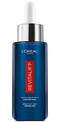
After cleansing, apply a targeted facial serum to protect your skin and boost hydration. For sagging skin, we recommend the L’Oréal Paris RevitaLift Triple Power Tri-Peptides Age-Defying Serum (pictured below), which blends a powerful tri-peptide complex with vitamin C and hyaluronic acid. The dermatologist-tested formula instantly boosts hydration, while consistent use supports long-term improvements in skin firmness, elasticity, and evenness. You can use it morning and night, but if you’d rather switch it up in the evening, try the L’Oréal Paris Age Perfect Skin Care Cell Renewal Anti-Aging Midnight Serum. It’s formulated with a patented antioxidant recovery complex and helps support skin renewal, so your skin looks firmer, smoother, and more radiant over time.

There is no single best moisturizer for sagging skin, but if we had to pick our favorite, it’d be the L’Oréal Paris RevitaLift Triple Power Anti-Aging Moisturizer. It provides up to 24 hours of hydration and helps firm, smooth, and plump the skin, thanks to its fast-absorbing formula powered by pro-retinol, vitamin C, and hyaluronic acid. In a consumer study of 102 GLP-1 users, 74% reported feeling their skin was firmer and less saggy after four weeks of use, while 81% felt their skin was plumper.I You can use it morning and night, but be sure to follow with a broad-spectrum sunscreen in the morning to shield against UV rays. Alternatively, use the L’Oréal Paris RevitaLift Triple Power Anti-Aging Moisturizer with SPF 30 in the morning—it’s the same formula, but with added SPF 30 for broad-spectrum sun protection. Finally, be sure to extend your moisturizer down to your neck and décolletage when applying your skincare—these areas can become loose or saggy with weight loss, just like your face.

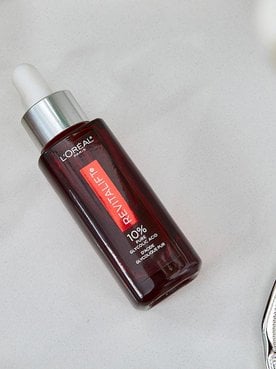
Three times per week—or as your skin tolerates—swap your usual nighttime face serum for the L’Oréal Paris RevitaLift Night Serum, 0.3% Pure Retinol. It contains our highest concentration of pure retinol alongside soothing aloe vera to help keep the skin feeling balanced and comfortable. Still, retinol can be drying for some, so if you’re a first-time user, start with a once-weekly application and gradually increase usage as your skin adjusts.
Next Up: 8 Best Products for Crepey Skin, According To Our Experts
Photo courtesy of L’Oréal Paris
Sources

This site is intended for US consumers. Cookies and related technology are used for advertising. To learn more, or opt-out, visit AdChoices and our privacy policy.
Your Privacy Choices
 Notice at Collection